
.jpg)
.jpg)

.jpg)



Tahoe vs. Suburban: Which One Is Better? Here’s How To Choose!
Car Buying

Both the Chevrolet Suburban and the Chevrolet Tahoe are excellent full-size SUVs — roomy, capable, and genuinely family-friendly. But if they're so similar, why does Chevy make both? That's exactly what I'm here to answer.
If you're new here — welcome! I'm Kelly, the Car Mom. I'm a CPST (Child Passenger Safety Technician), mom of four, and overall car enthusiast. My goal is to help you find the right vehicle for your family. Let's break down the Suburban vs. Tahoe so you can decide which one fits your life.
Do You Actually Need a Full-Size SUV?
Before comparing these two, it's worth asking: do you need a full-size vehicle at all? The two biggest factors are passenger space and trunk size.
If you have a smaller family — two or even three kids — a full-size SUV isn't always necessary. The extra room is nice, but so is a less expensive vehicle with better fuel economy. If your family is larger, or if you regularly use all three rows and still need real trunk space, that's where full-size vehicles shine. Midsize SUVs can have great cargo room with the third row down, but once that row goes up, it eats into your space significantly.
If trunk space is a top priority, I've put together a full guide on the best family vehicles for trunk space — worth a read before you decide.
%20(29.7%20x%2030%20cm)%20(1).png)
Chevy Tahoe: Specs, Car Seat Setup & Family Features
The Chevy Tahoe is one of the most popular full-size SUVs on the market, and for good reason. It seats up to 8 passengers and offers 25.5 cubic feet of cargo space behind the third row — enough for everyday family life. It's big but not overwhelming, and most families find it easier to maneuver than the Suburban.
You can see my full video review here.
Price & Fuel Economy
- Starting MSRP: ~$56,200
- Fuel economy: 21 city / 28 hwy / 24 combined mpg
Exterior: Sporty Options Available
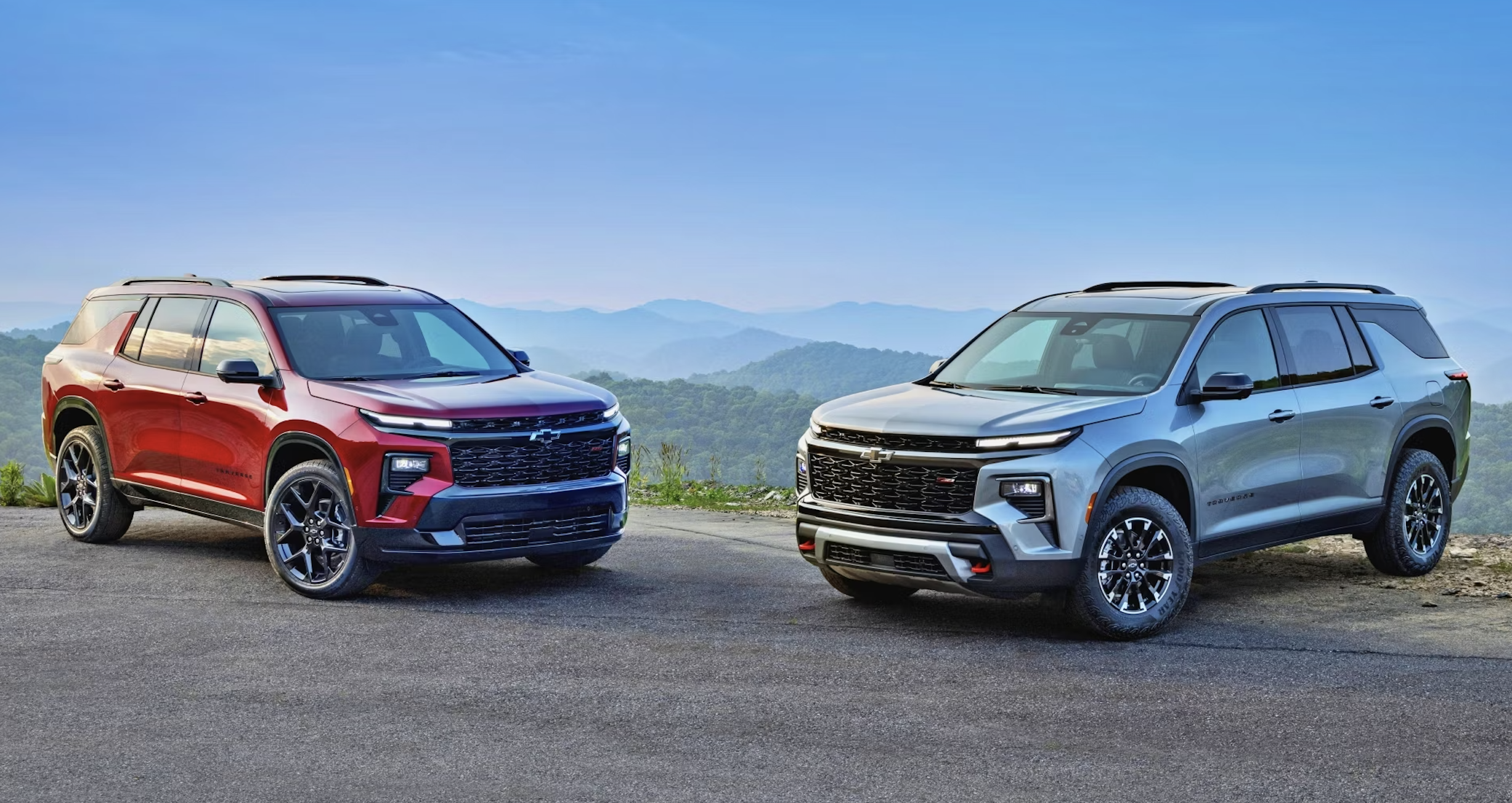
The Tahoe has solid exterior options depending on the trim. The Z71 trim is a standout — it's giving outdoorsy in the best way, with a rugged look that feels less "suburban carpool" and more adventure-ready without losing practicality. Notable Z71 styling cues include:
- Exposed skid plate
- Bold, colored tow hooks
- Blacked-out badging
- Rugged running boards
- Tucked rear wiper for a clean back end
Cypress Gray with black lettering? Obsessed. It has that slightly rugged 4Runner/Sequoia vibe. If exterior styling matters to you, the Z71 delivers.
Car Seat Setup
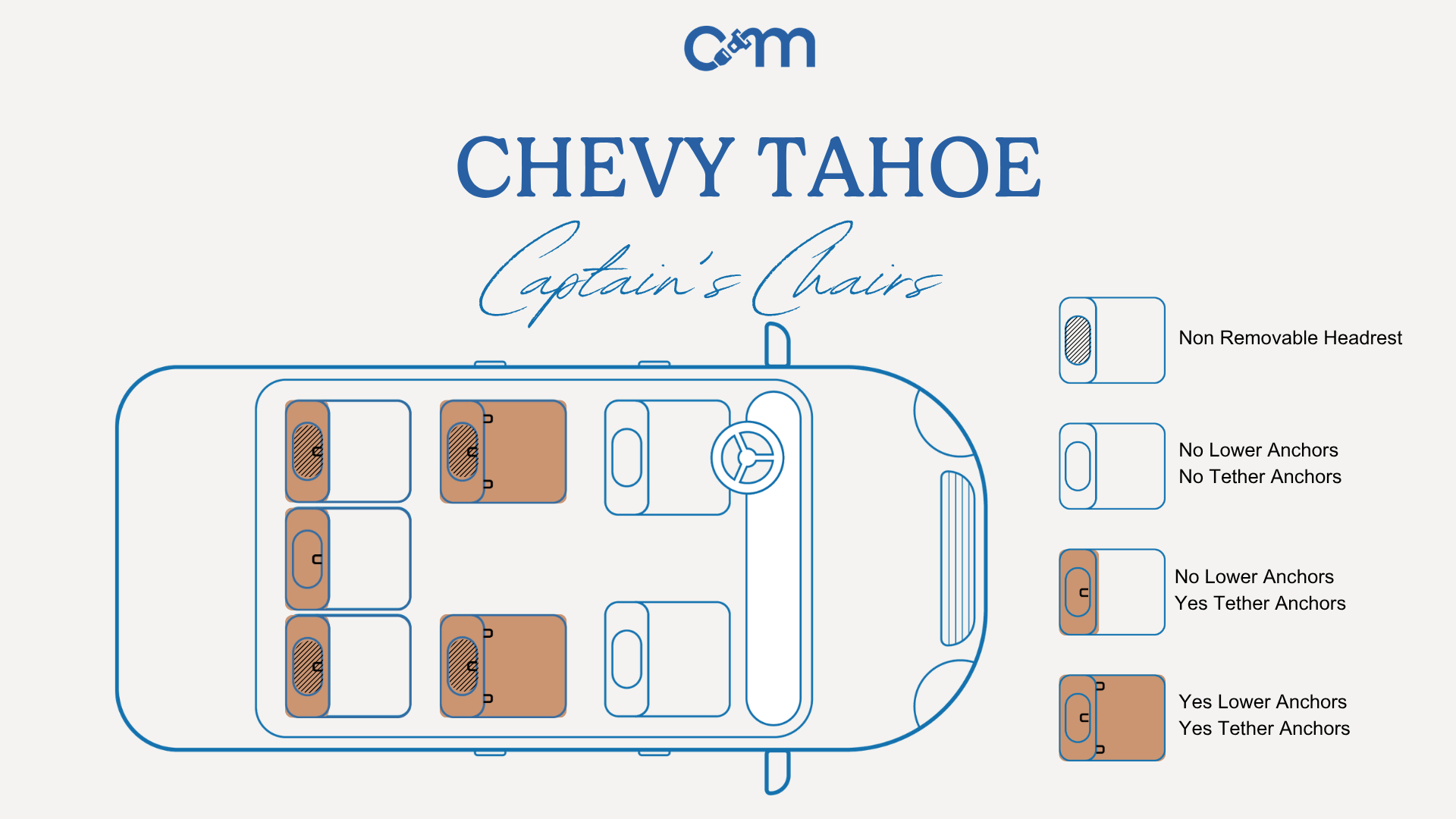
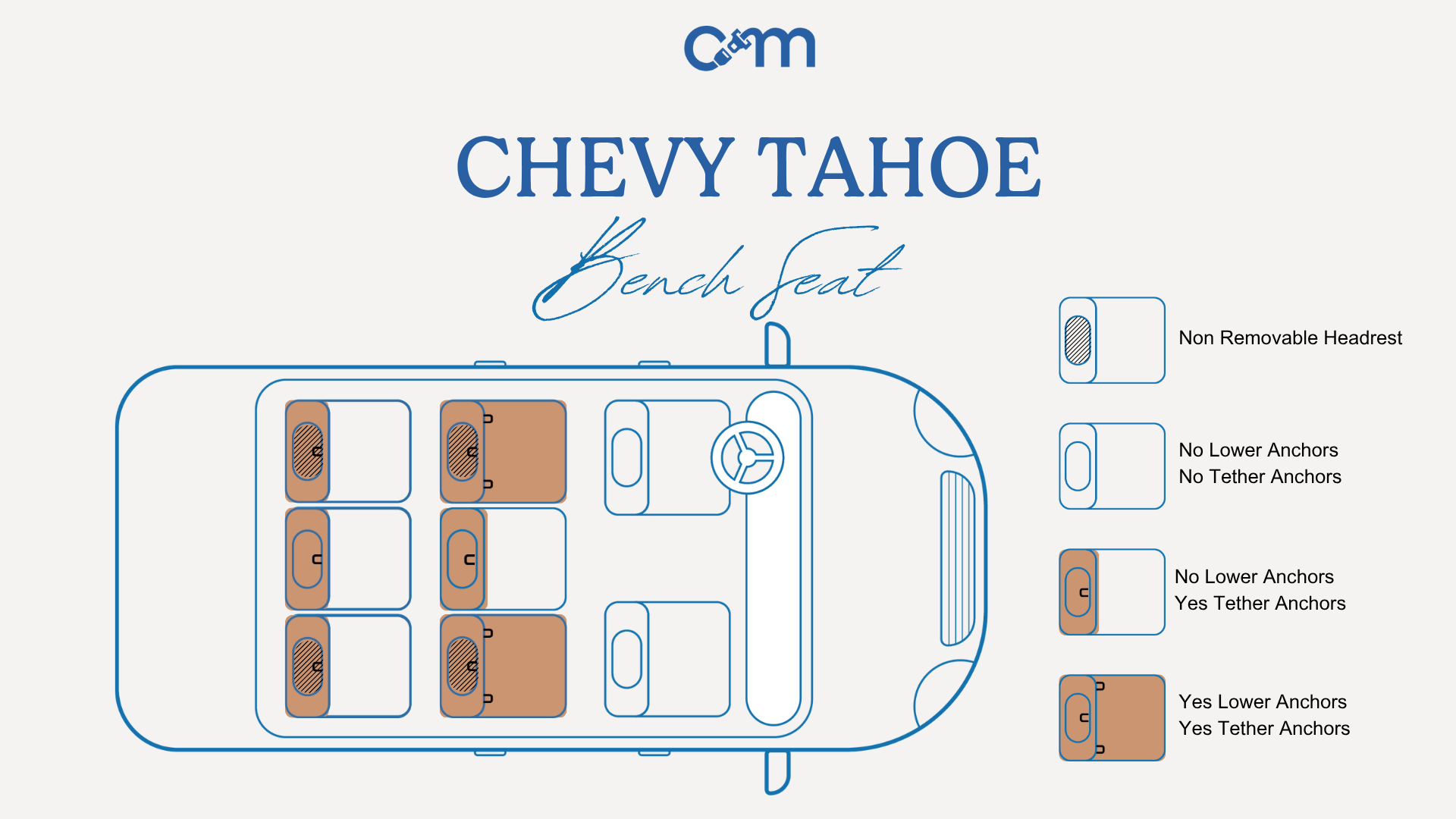
Chevy uses the LATCH system throughout. In the second row, you'll find lower anchors and top tethers in all seating positions — the anchors are exposed and easy to use, and the wide bench means three across is absolutely doable. You can fit a bulky rotating seat, multiple harnessed seats, or comfortably sit an adult next to a car seat.
A few limitations worth knowing:
- The bench is a 60/40 split rather than three independent seats. It works well, but I'd prefer individual seats.
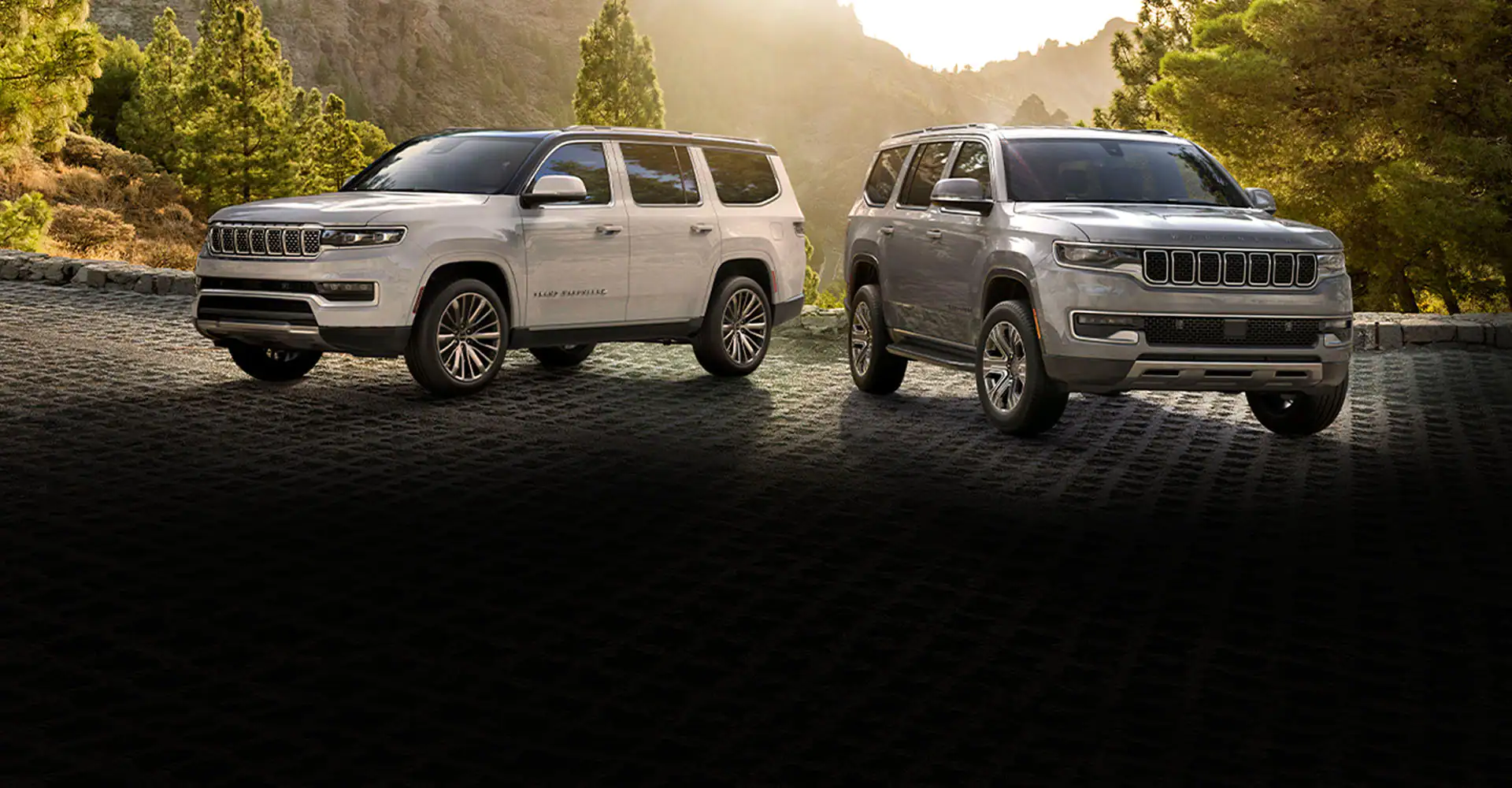
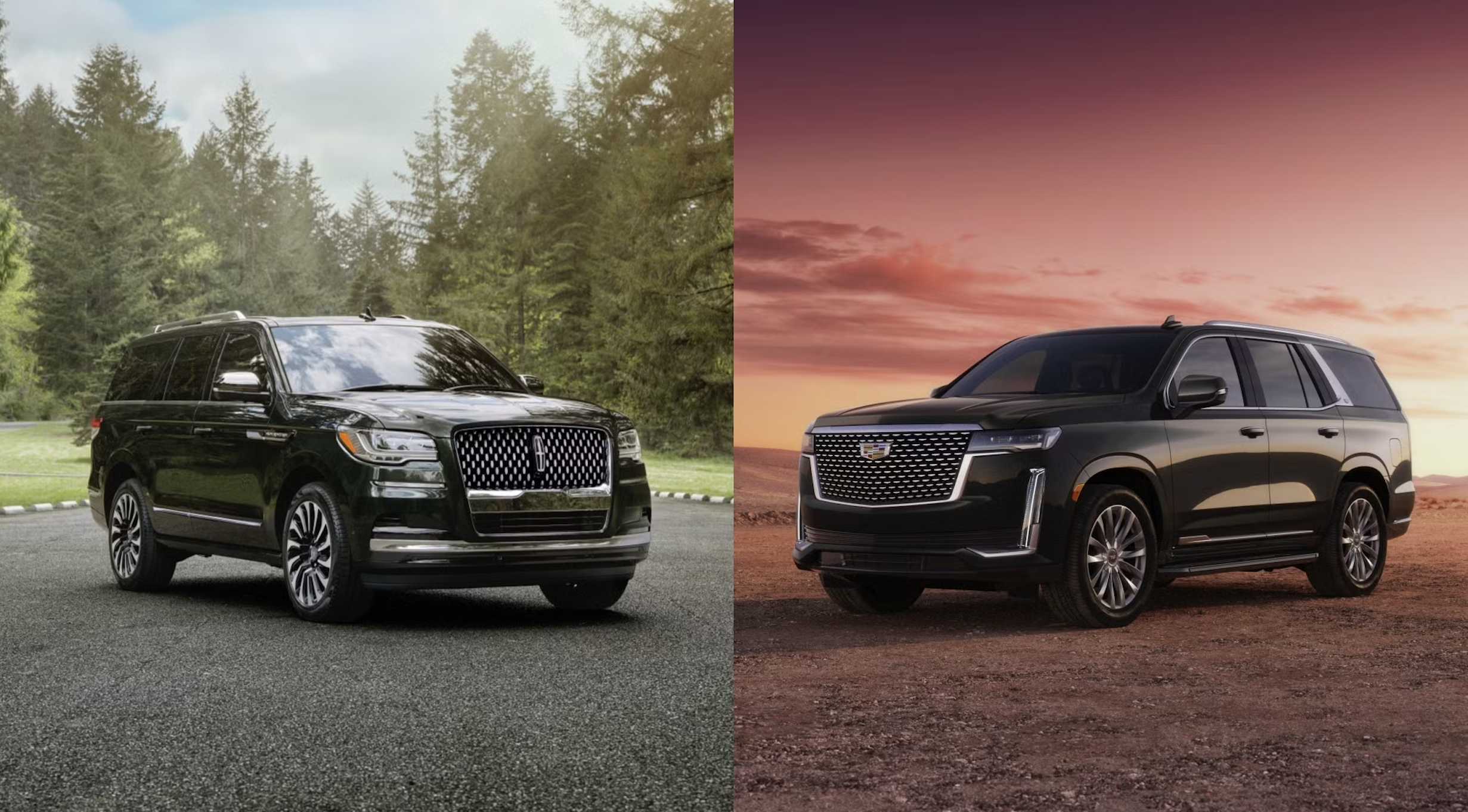
- No car seat tilt feature. If you need third-row access with a car seat installed in the second row, this matters. The Tahoe uses a fold-and-flip, not a tilt — so depending on your car seat, access to the third row can be tricky. If car seat tilt is a must, consider the Ford Expedition, Lincoln Navigator, Jeep Wagoneer/L, Nissan Armada, or Infiniti QX80.
- Third row has top tethers only — no lower anchors. You'll use the seatbelt plus tether for forward-facing seats back there.
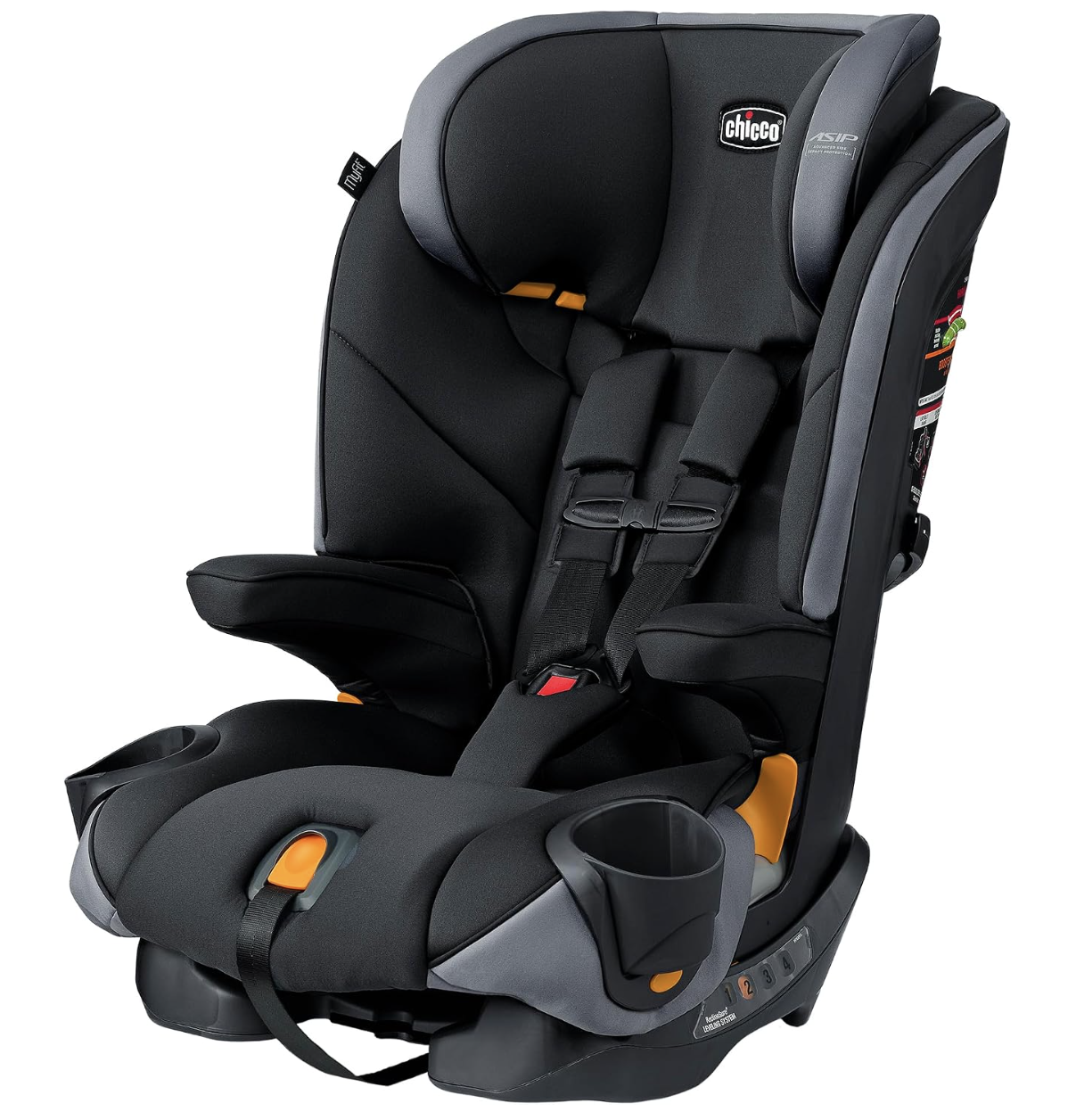
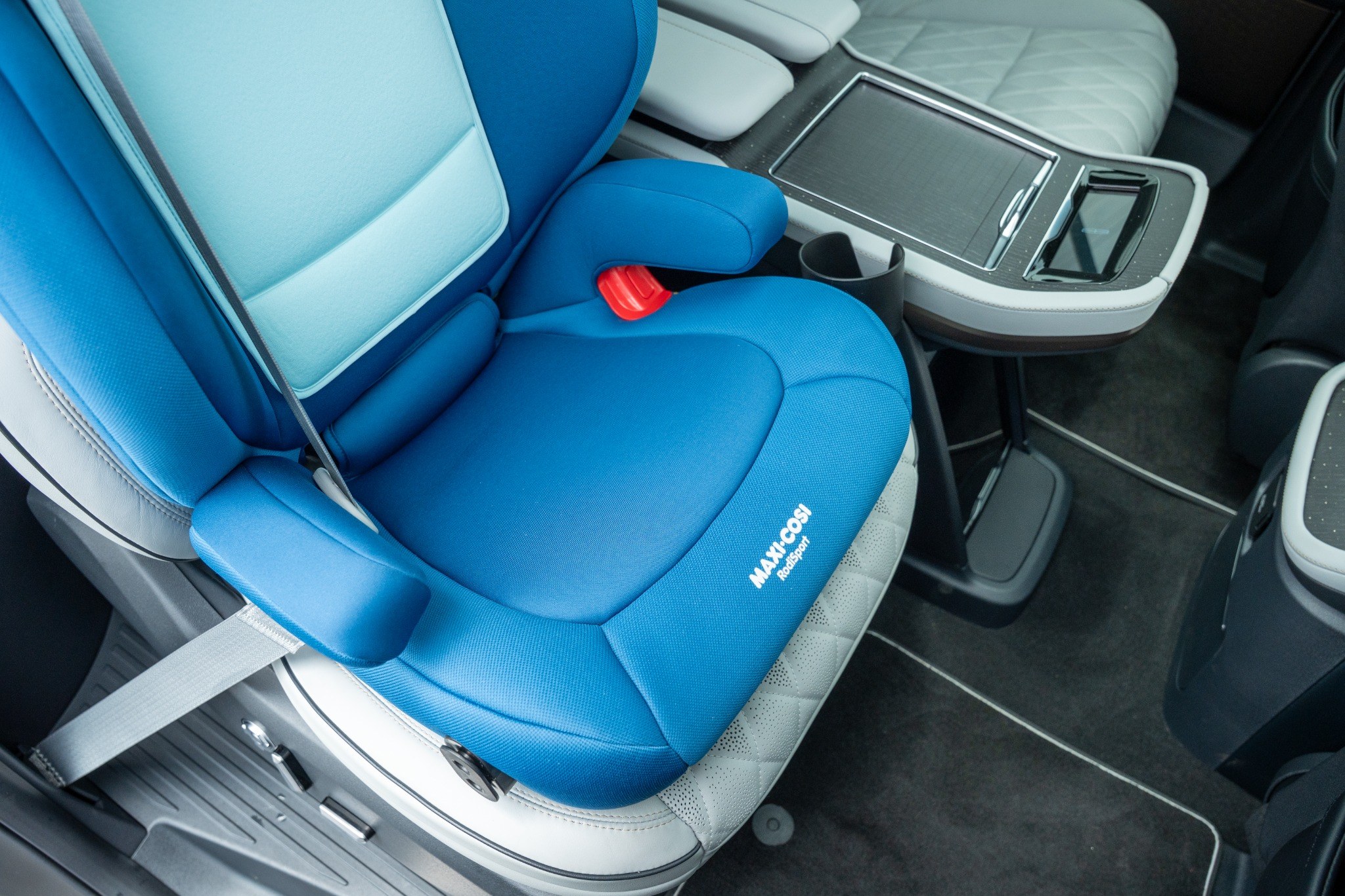
- No middle head restraint in the third row. This is a real safety concern for booster seat use. A harnessed car seat — like the Chicco MyFit Harness + Booster — is the better choice for that center position. It keeps your child in a harness longer before transitioning to a booster, which is the safer solution in a seat without a head restraint.
- No built-in sunshades. If this is a dealbreaker, I recommend a dark window tint as a solid workaround.
Pros & Cons
Pros:
- Excellent infotainment system — one of my favorites in any full-size SUV
- Strong safety suite: automatic emergency braking, forward collision alert, lane-keeping assist, lane departure warning, intelligent high beams
- Second row can accommodate any three car seat combination across
- Second-row ceiling vents
Cons:
- 60/40 bench instead of three independent seats
- No sunshades
- No car seat tilt for third-row access
- Trunk is noticeably smaller than the Suburban
- No middle head restraint in the third row
- No lower anchors in the third row
Notable 2025 Updates
- Trunk opens automatically when you approach it — genuinely cool
- Super Cruise (Chevy's semi-autonomous driving tech) available in more trim levels
- Panoramic sunroof and ceiling vents now available in the third row
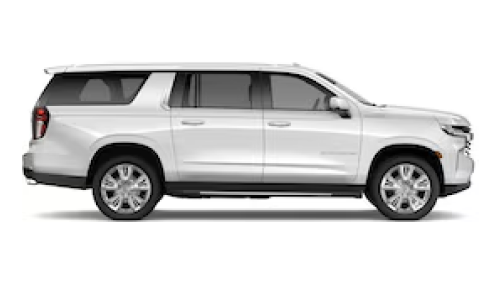
Chevy Suburban: Specs, Car Seat Setup & Family Features
The Suburban is the biggest full-size SUV you can buy — full stop. It's 15 inches longer than the Tahoe, and you feel most of that in the trunk and third row. If you need maximum space, this is your vehicle.
The interior is nearly identical to the Tahoe, with the same excellent infotainment system, same LATCH setup in the second row, and the same technology available. The difference is in how much room everyone has, and the trunk is genuinely massive.
You can see my full review here.
Price, Fuel Economy & Towing
- Starting MSRP: ~$59,200 (approximately $3,000 more than the Tahoe)
- Fuel economy: 16 city / 20 hwy / 18 combined mpg
- Max towing: Up to 8,200 lbs when properly equipped
Engine Options
The 2025 Suburban offers three engine choices:
- 5.3L V8 — the standard engine, great for everyday driving
- 6.2L V8 — more power when you need it
- 3.0L inline-six turbodiesel Duramax — the most fuel-efficient option, especially on long-distance drives
2025 Exterior Refresh
The 2025 Suburban got a genuinely nice exterior refresh — and one of the best things about the new lineup is that each trim has its own distinct styling. From the sporty to the luxurious, you're not getting the same look at every price point. Higher trims like the High Country lean into elevated, sports-luxury design details. If the Suburban's older boxy look felt a little dated, the 2025 update addresses that.
Interior & Seating
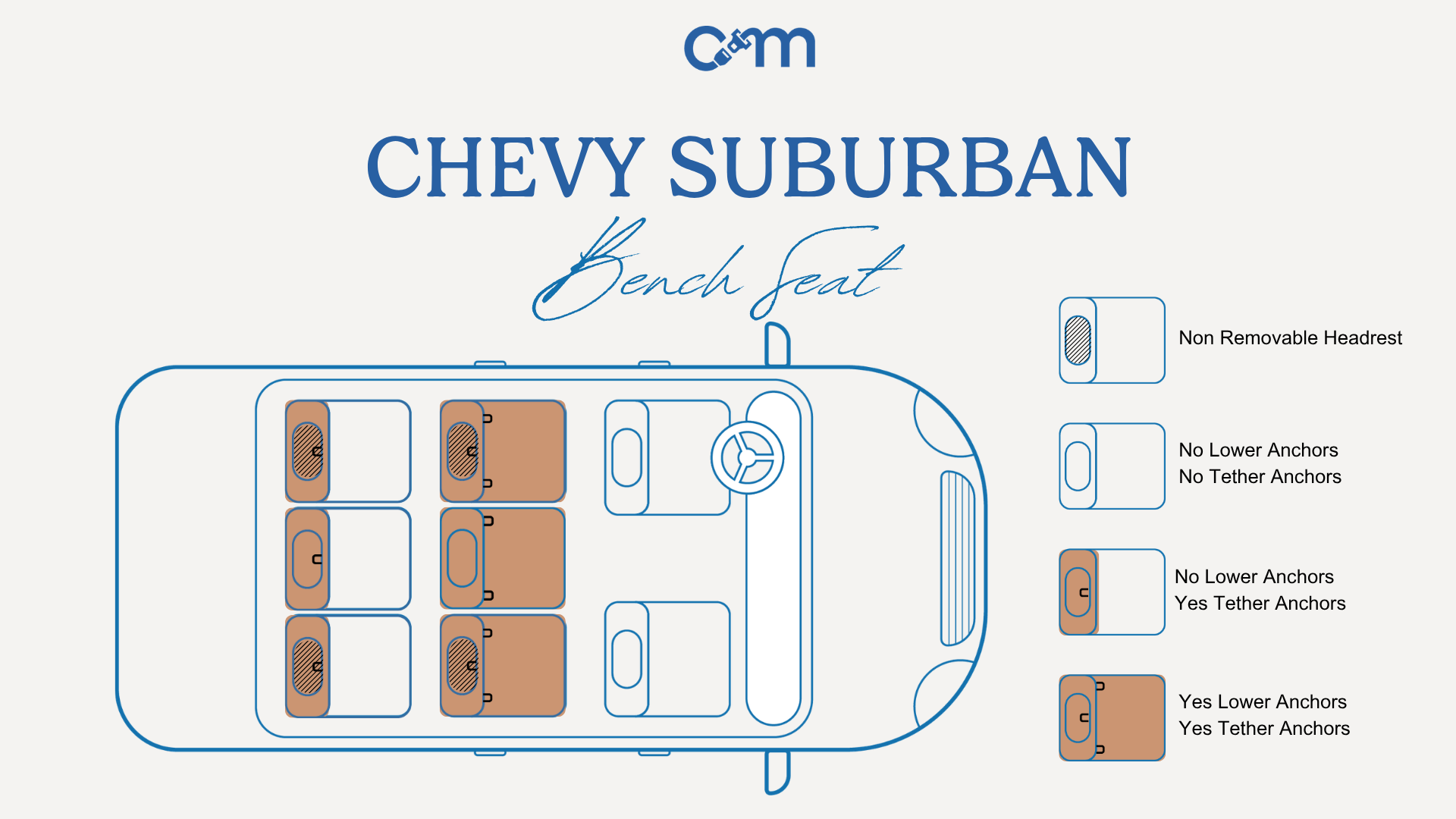
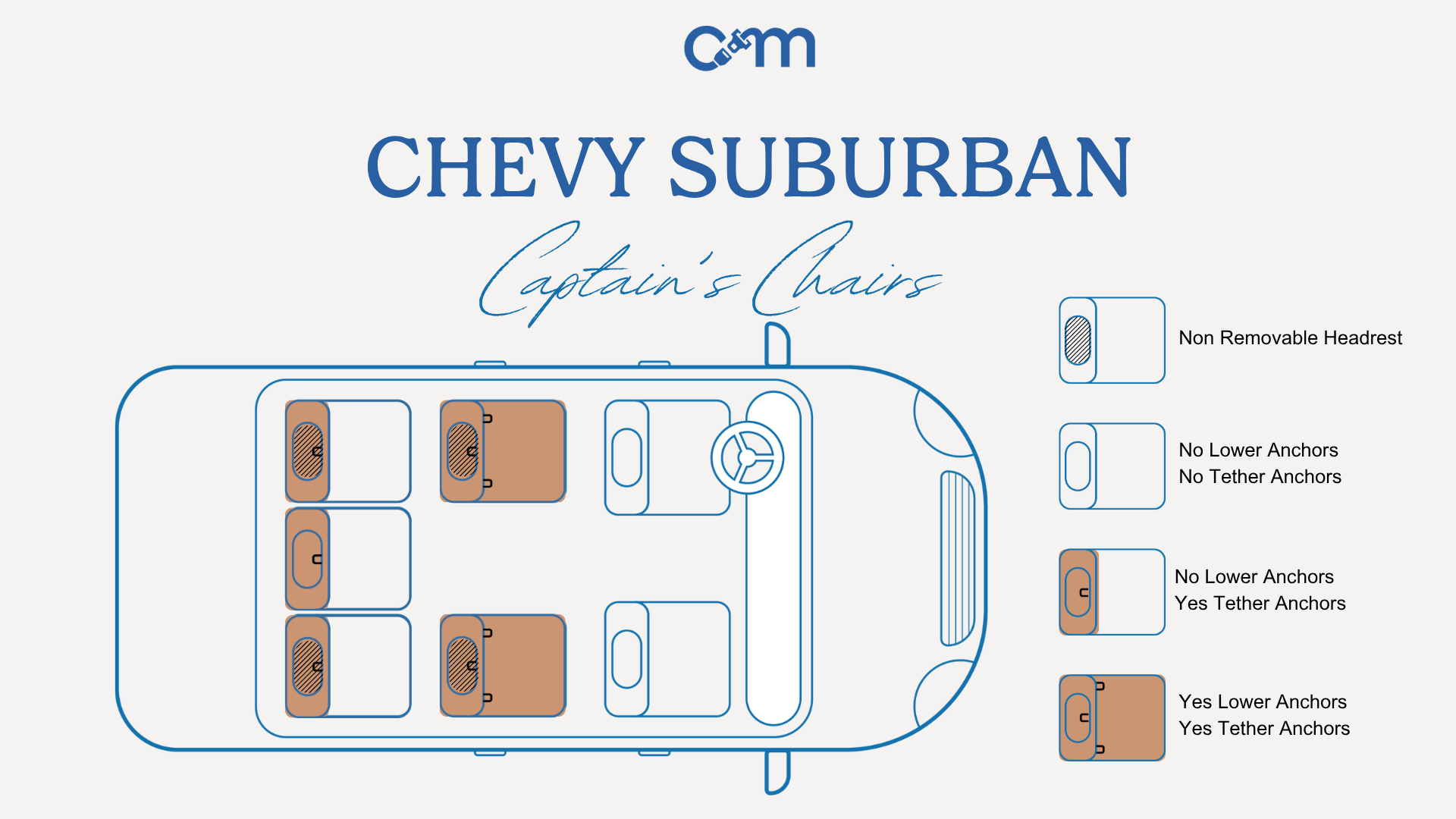
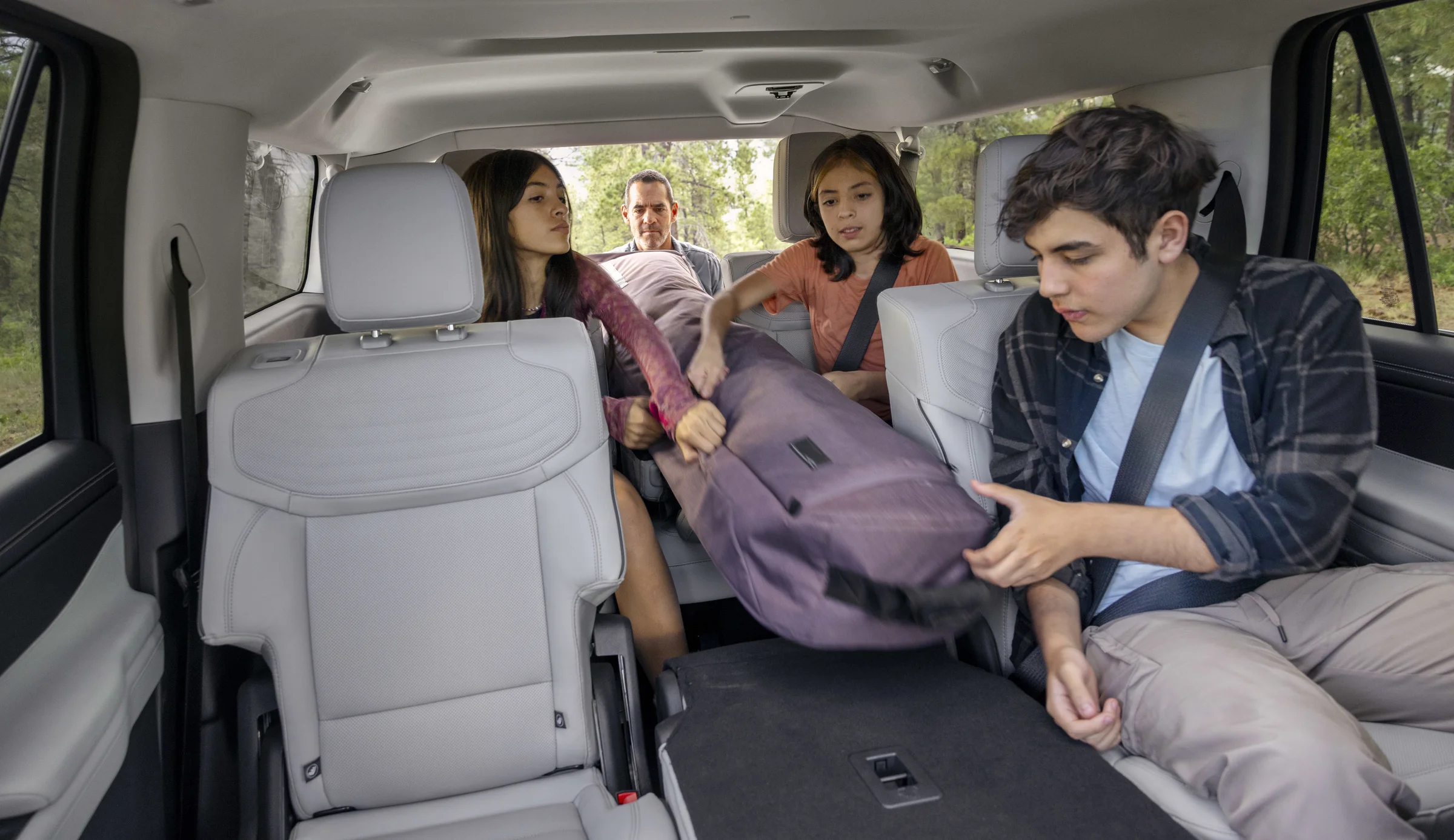
With captain's chairs, you get lower anchors and tether anchors in both second-row seats, built-in screens in the back of the headrests, a panoramic sunroof, ceiling vents, and on the High Country trim, heated seats, two HDMI ports, and two USB-C ports. The captain's chairs also make the aisle noticeably open — third-row access is genuinely decent, and it's one of the few full-size SUVs where I actually think the captain's chair layout is worth it.
With the bench seat (60/40 split), you get lower anchors and top tethers in every seat. The passenger-side seat folds and flips independently, while the driver side and center flip together. Important: there is no way to access the third row with a car seat installed in the second row. If regular third-row access with a car seat in row two is a priority, captain's chairs are the more practical choice — or consider a vehicle with a car seat tilt feature (Ford Expedition, Lincoln Navigator, Jeep Wagoneer/L, Nissan Armada, Infiniti QX80).
Car Seat Setup
Car seat options are excellent in the Suburban's spacious second row. You can fit a bulky rotating seat, do three across with ease, or sit comfortably as an adult next to a car seat.
Three Across: With a narrow seat in the center, you can fit a rotating car seat or a variety of full-size seats outboard. The center position has no head restraint, so a harnessed car seat is a better choice there than a booster — the Chicco MyFit Harness + Booster is a great fit here and still allows the passenger-side seat to fold and flip when installed.
If you need regular third-row access: Use a baseless car seat or keep the passenger-side second-row seat open. With a narrow seat in the center bench position, you can still fold the passenger seat forward.
Third Row: No lower anchors, but top tether anchors in all three seats. Legroom is genuinely impressive — one of the best in any three-row vehicle. Unlike many midsize SUVs, the middle seat is a real seat. However, there is no middle head restraint, which is disappointing. It's been added to both the Chevy Equinox and Traverse, so it's a frustrating omission here. For safety, that center seat should either have a harnessed car seat or not be used as a booster position.
Head restraints in the outboard third-row positions are not removable, which can occasionally cause compatibility issues — just something to check with your specific car seat before purchasing.
One genuinely impressive capability: the Suburban is one of the only three-row vehicles that can fit three across in the third row with very narrow car seats. It's not something I'd recommend tackling alone — check with a CPST — but it is possible if your family needs it.
Pros & Cons
Pros:
- Largest full-size SUV available
- Incredible trunk space
- Second and third row ceiling vents
- Top tether anchors in all seats
- Lower anchors in the second row
- Three across in third row is possible (rare)
- Great third-row legroom for adults and older kids
Cons:
- Worst fuel economy of the two
- No sunshades
- No lower anchors in the third row
- No middle head restraint in the third row
- No car seat tilt feature — third-row access is fold-and-flip only
- Big vehicle; harder to maneuver and park
Notable 2025 Updates
- Refreshed exterior — each trim has a distinct look
- Trunk opens automatically
- Updated infotainment system (a significant improvement)
- Redesigned center console with USB-A, USB-C, and wireless charging
Suburban vs Tahoe: Size Difference Explained
The only real difference between the Tahoe and Suburban is size. Think of it like the Yukon vs. Yukon XL, or the Expedition vs. Expedition Max. Interestingly, Chevrolet is the only manufacturer that gave its standard and extended-wheelbase full-size SUVs two completely different names.
The Suburban is 15 inches longer, and you feel that mostly in the back half of the vehicle. There's a bit more third-row legroom, but the majority of that length shows up in trunk space. If you regularly haul gear, travel with the third row up, or have a larger family, the extra room is worth considering. If you want something slightly easier to maneuver — and "slightly" is relative, because the Tahoe is still a big vehicle — the Tahoe makes more sense.
My honest advice: if you're leaning toward the Suburban just for the possibility of extra space, test drive both. You'll feel the difference in parking lots and tight turns, and it might change your mind — or confirm the Suburban is exactly what you need.
Which Should You Buy: Tahoe or Suburban?
The Tahoe and Suburban are both outstanding full-size SUVs. The question to honestly ask yourself is: is the extra trunk space worth the extra cost and lower fuel economy?
Choose the Tahoe if:
- You want a full-size SUV that's easier to park and maneuver
- Fuel economy matters to your budget
- Your family doesn't consistently fill the third row and need cargo space at the same time
Choose the Suburban if:
- You regularly use all three rows and need real trunk space
- You have a larger family or frequently haul sports gear, strollers, or luggage
- You want the most passenger room in any full-size SUV
Both vehicles share the same car seat setup limitations — no lower anchors in the third row, no car seat tilt, no middle head restraint in row three. Neither is a clear winner on car seat features alone.
Can I Be Honest for a Minute?
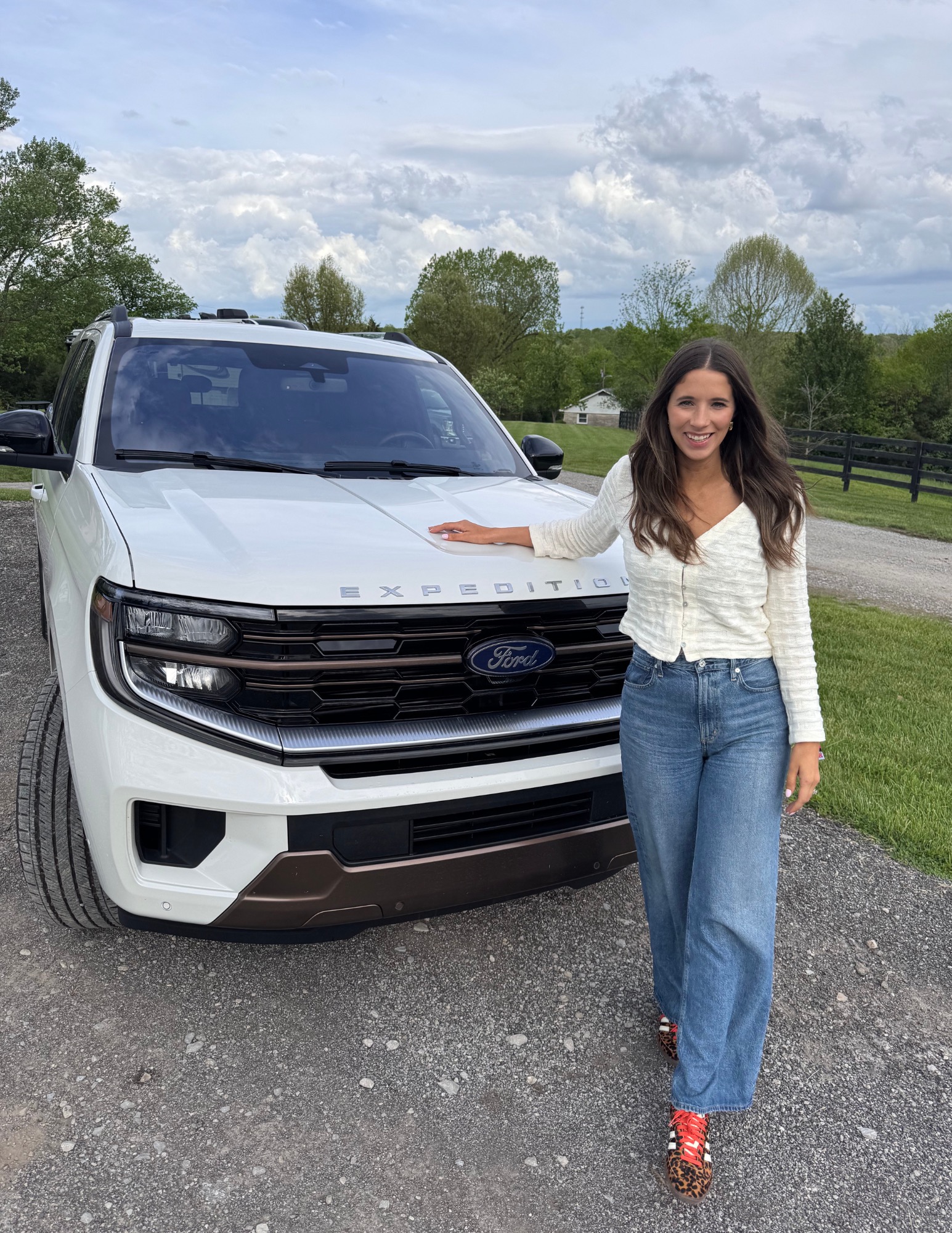
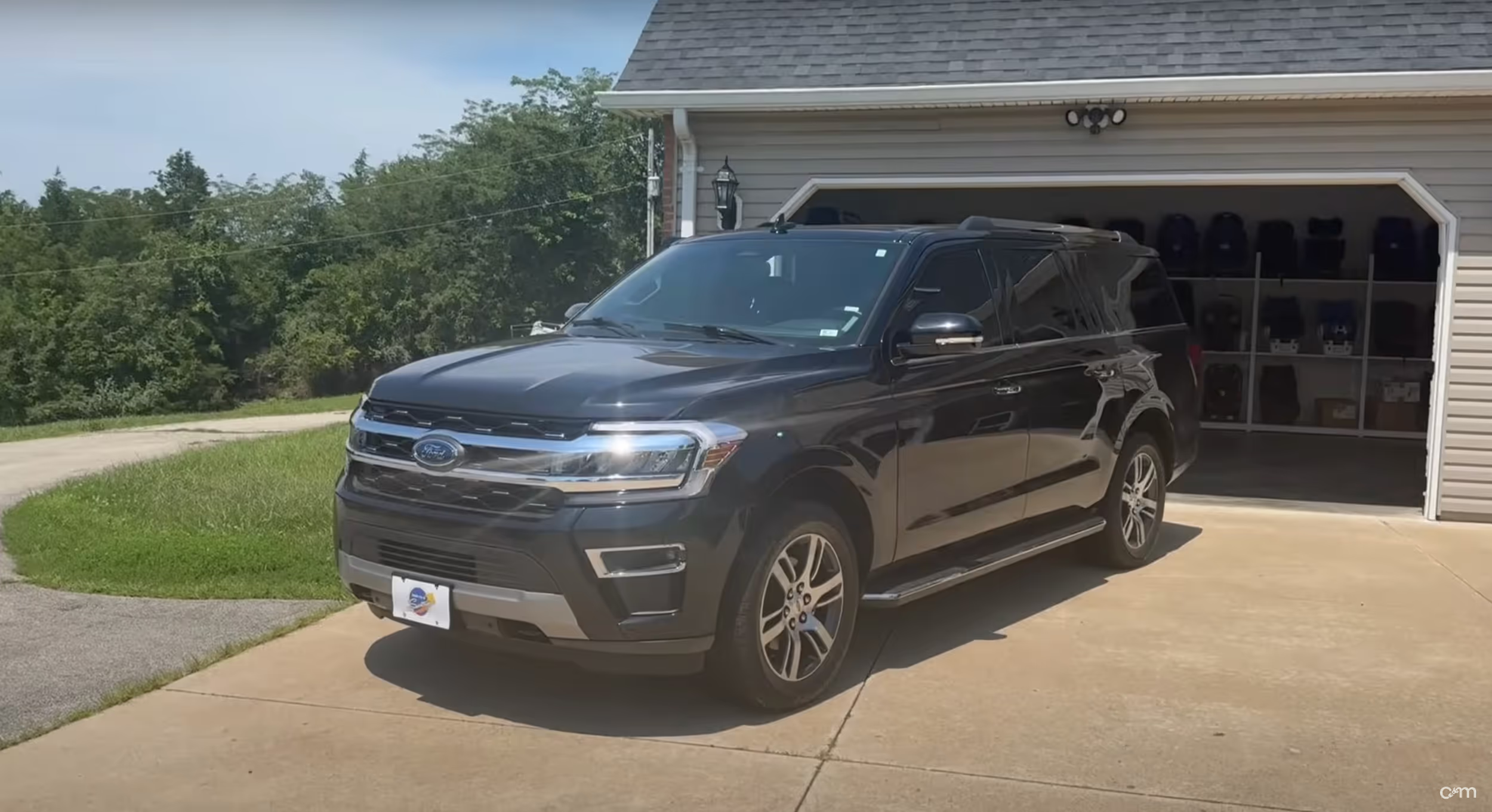
These are both great vehicles, and I think you'd be happy with either one. But I'd feel like I was leaving something out if I didn't tell you to at least look at the Ford Expedition Max before you decide. If car seat flexibility is high on your list — especially third-row access and tilt features — it's worth a serious look. Check out my full review here.
Still not sure which full-size SUV is right for you? Check out my Full-Size Showdown for an in-depth comparison of every full-size option on the market.
.jpg)









.jpg)

.jpg)






Reach out & let’s get started
Whether you're comparing models, prepping for the dealership, or looking for car seat recommendations, we’re here to help.