
.jpg)
.jpg)

.jpg)



Booster Seat Requirements: When Is It Safe To Transition To A Booster?
Car Seats
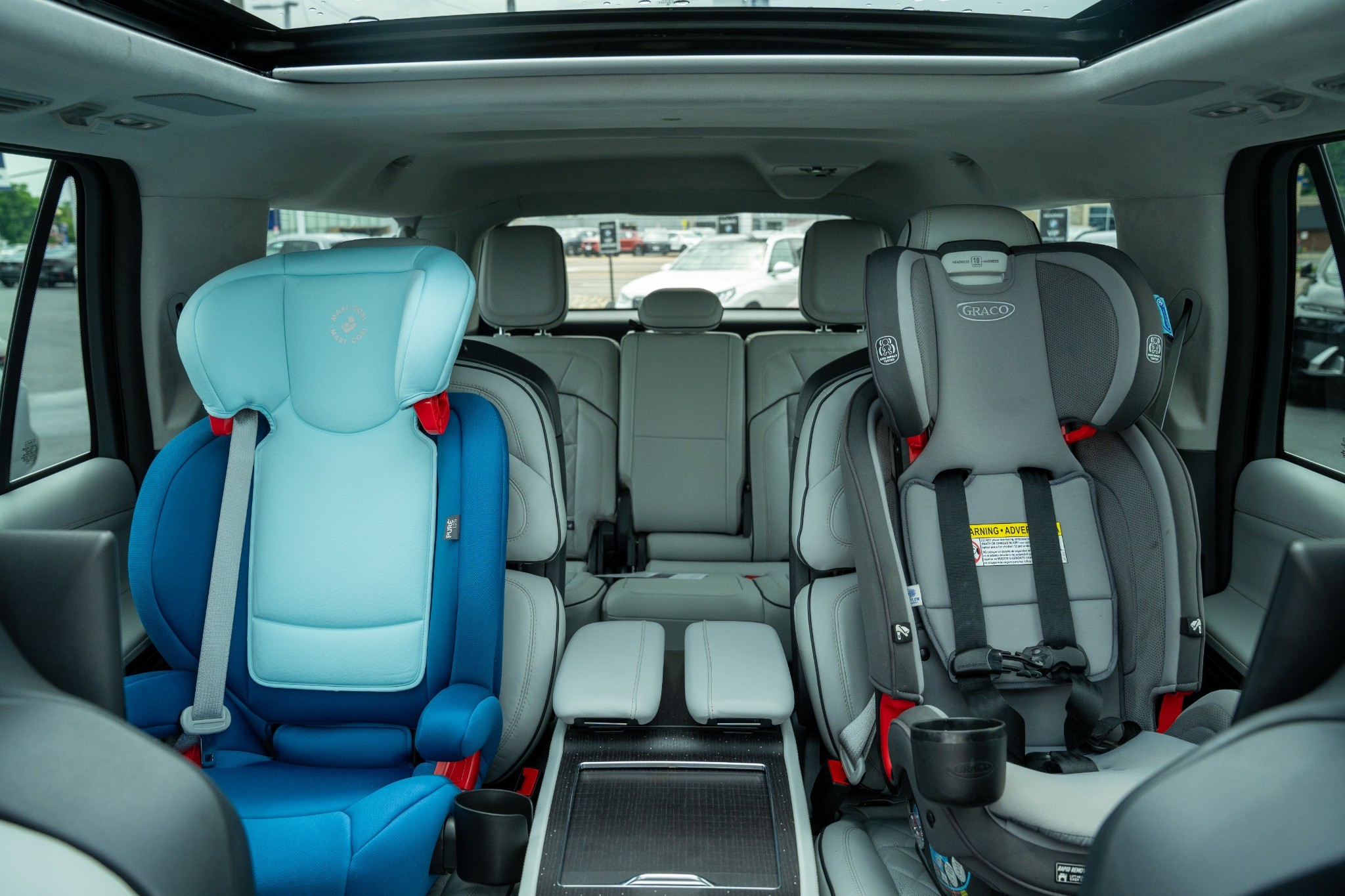
Booster Seat Requirements: Everything Parents Need To Know Before Making The Switch
Transitioning your child into a booster seat is a big milestone, and honestly, it’s one of the stages that causes the most confusion for parents. Between state laws, manufacturer minimums, best practice recommendations, and advice from other parents, it can feel hard to know what’s actually right for your child.
If you’re new here, I’m Kelly, The Car Mom — a mom of four and a Child Passenger Safety Technician (CPST). Helping families figure out safe and practical car seat setups is a huge part of what I do, and booster seat questions are some of the most common ones I get.
If you’re specifically wondering when kids should move into a booster seat, check out my full guide: Booster Seats: What Age Is the Right Time to Switch? In this post, we’re focusing specifically on booster seat requirements, proper fit, safety considerations, and what parents should know before making the switch.
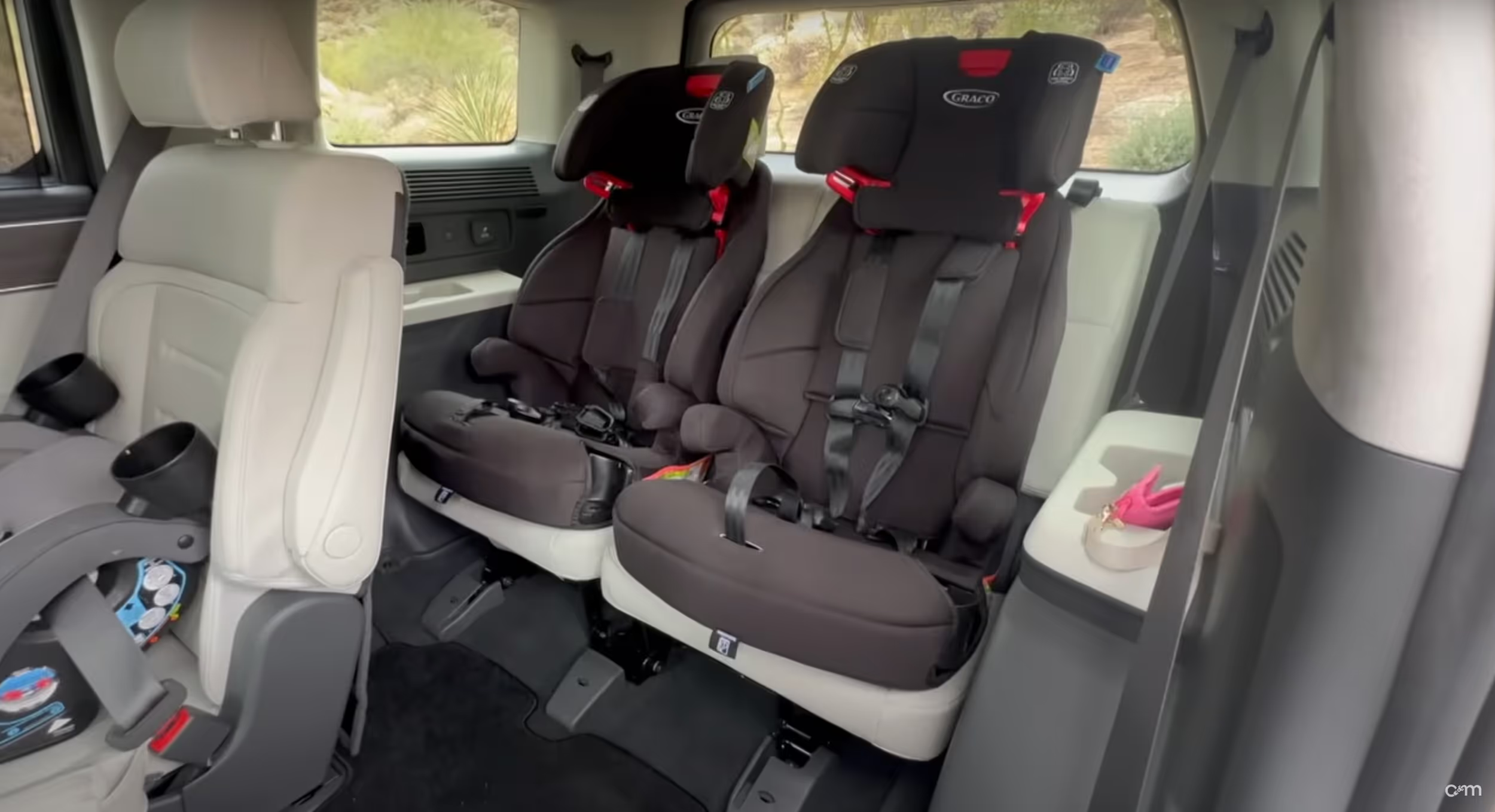
Booster Seat Recommendations:
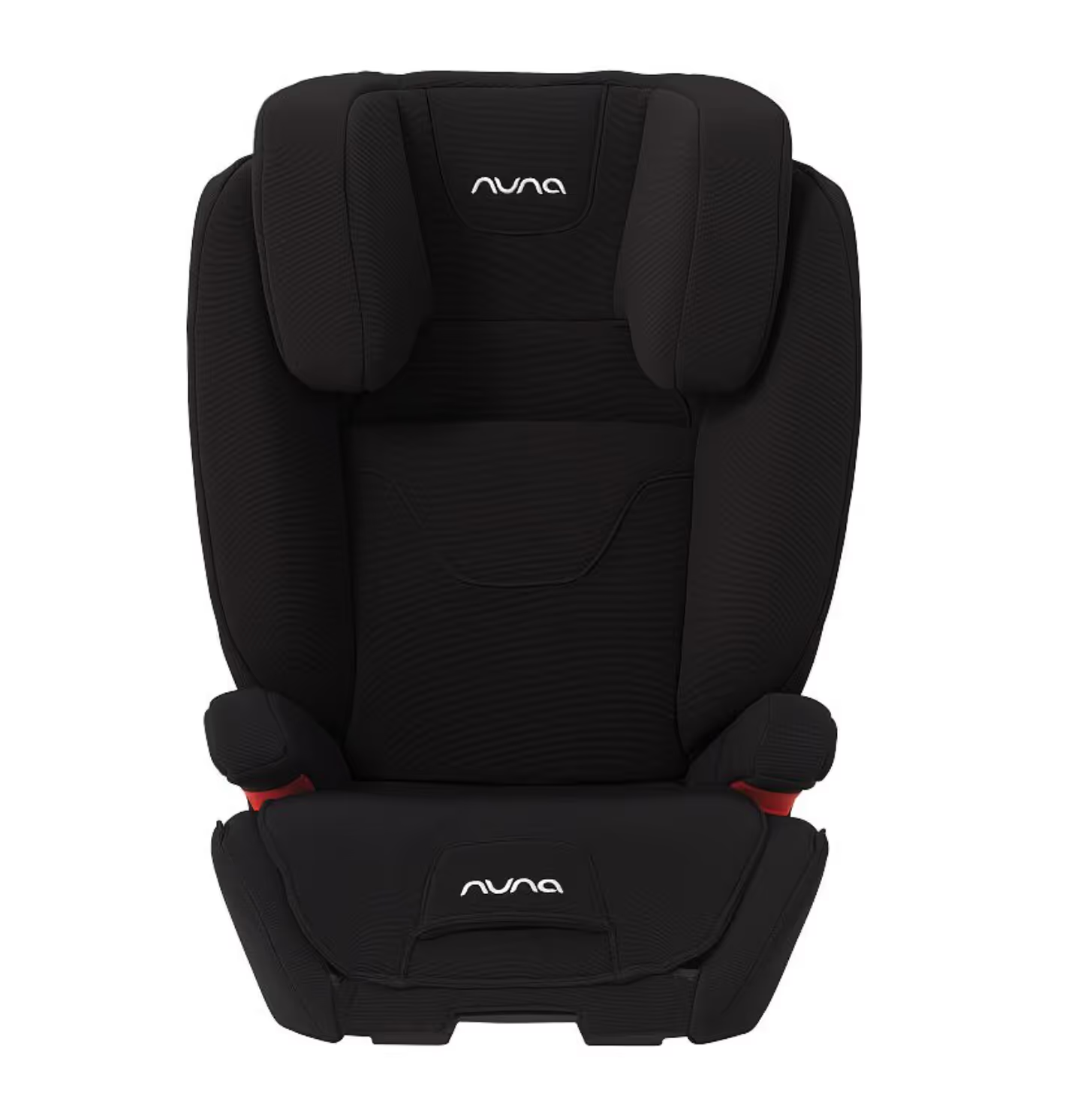
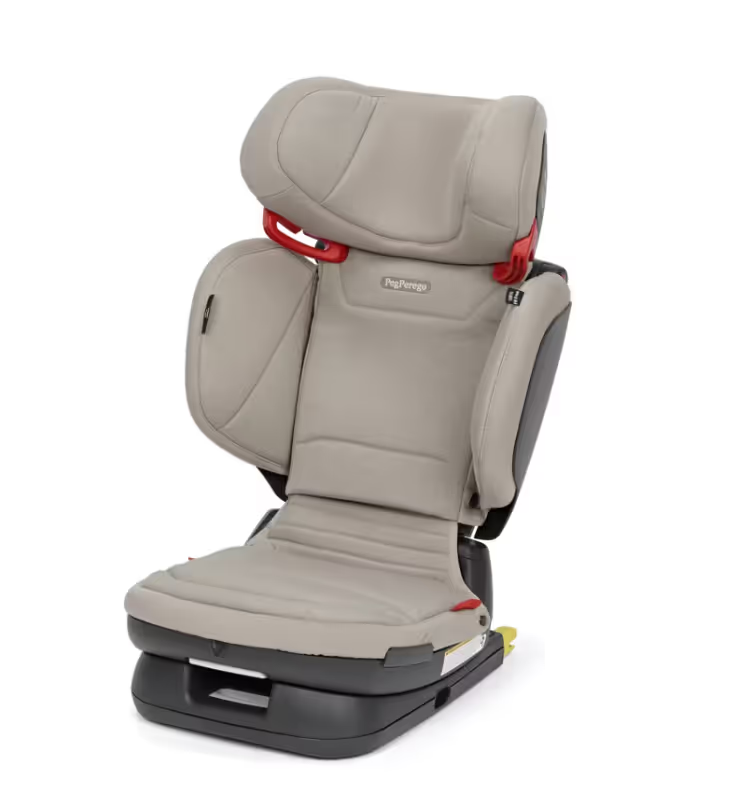
- For easier access to the buckle (LATCH optional): Peg Viaggio Flex 120 Booster
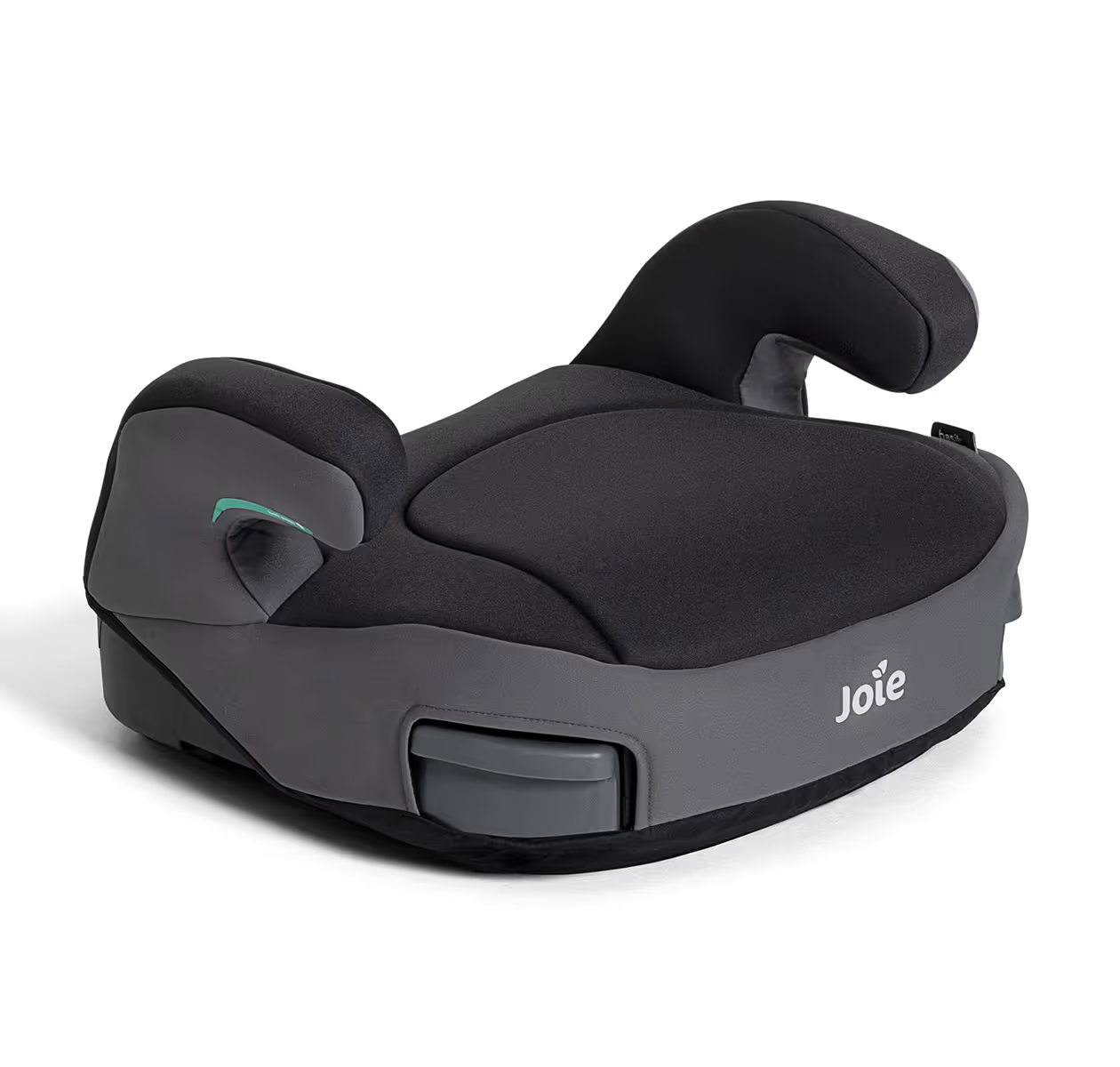
- For a more narrow, backless option under $50 (LATCH optional) : Graco® TurboBooster® LX Backless Booster
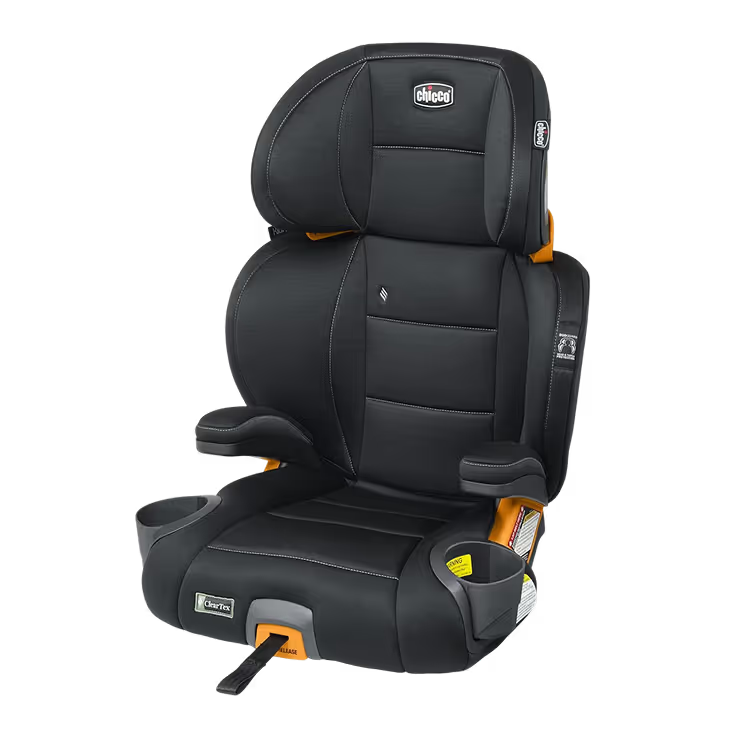
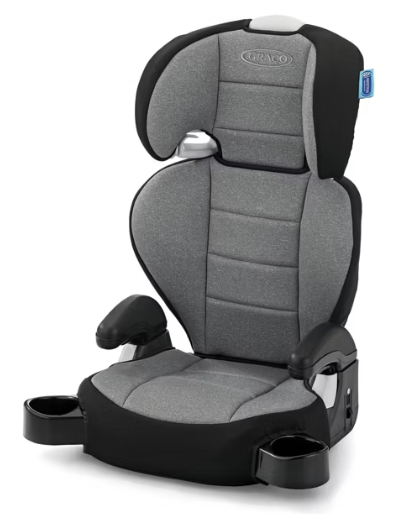
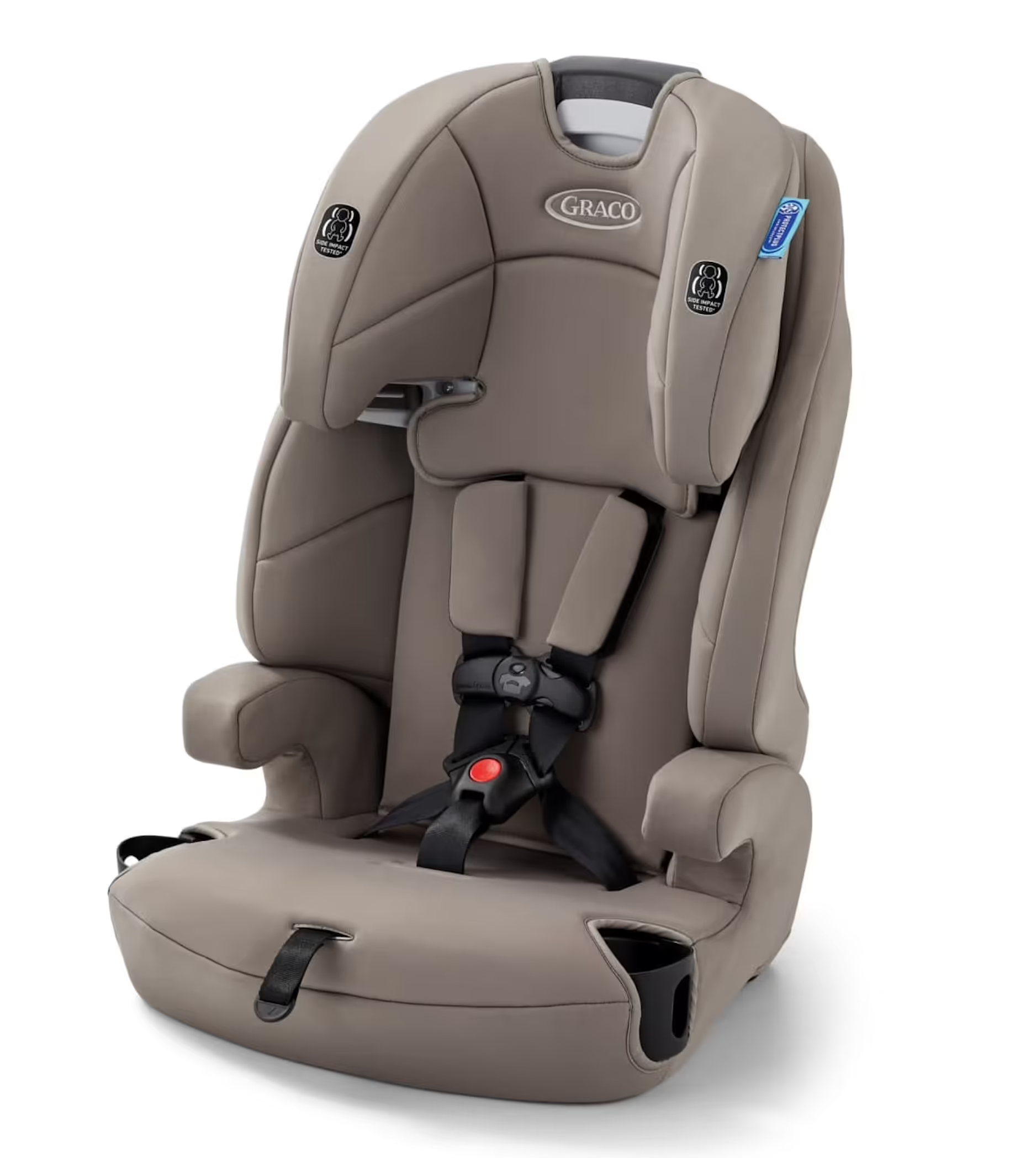
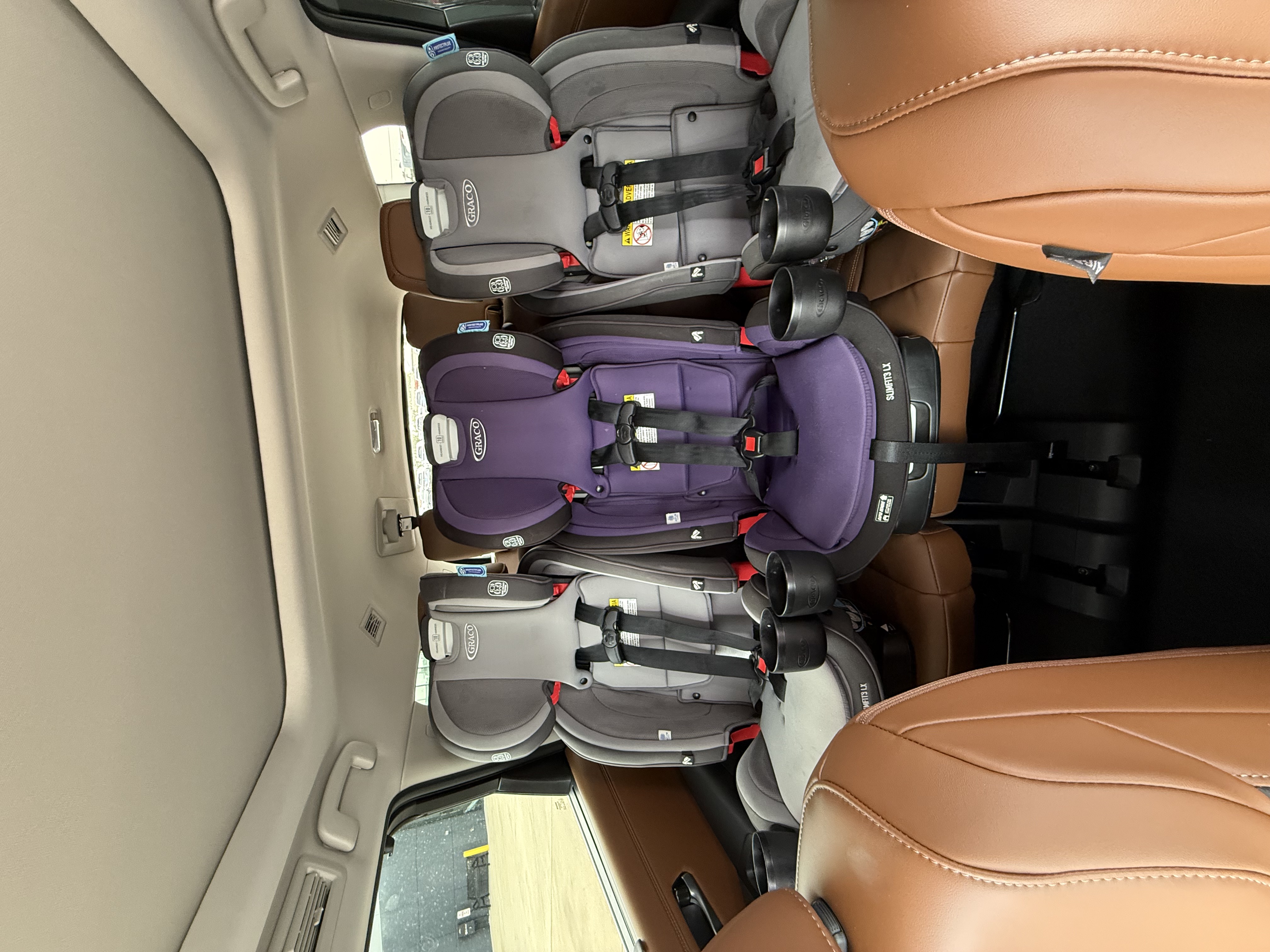
- For a booster with cupholders: Graco TurboBooster 2.0 Highback Booster
What Is A Booster Seat?
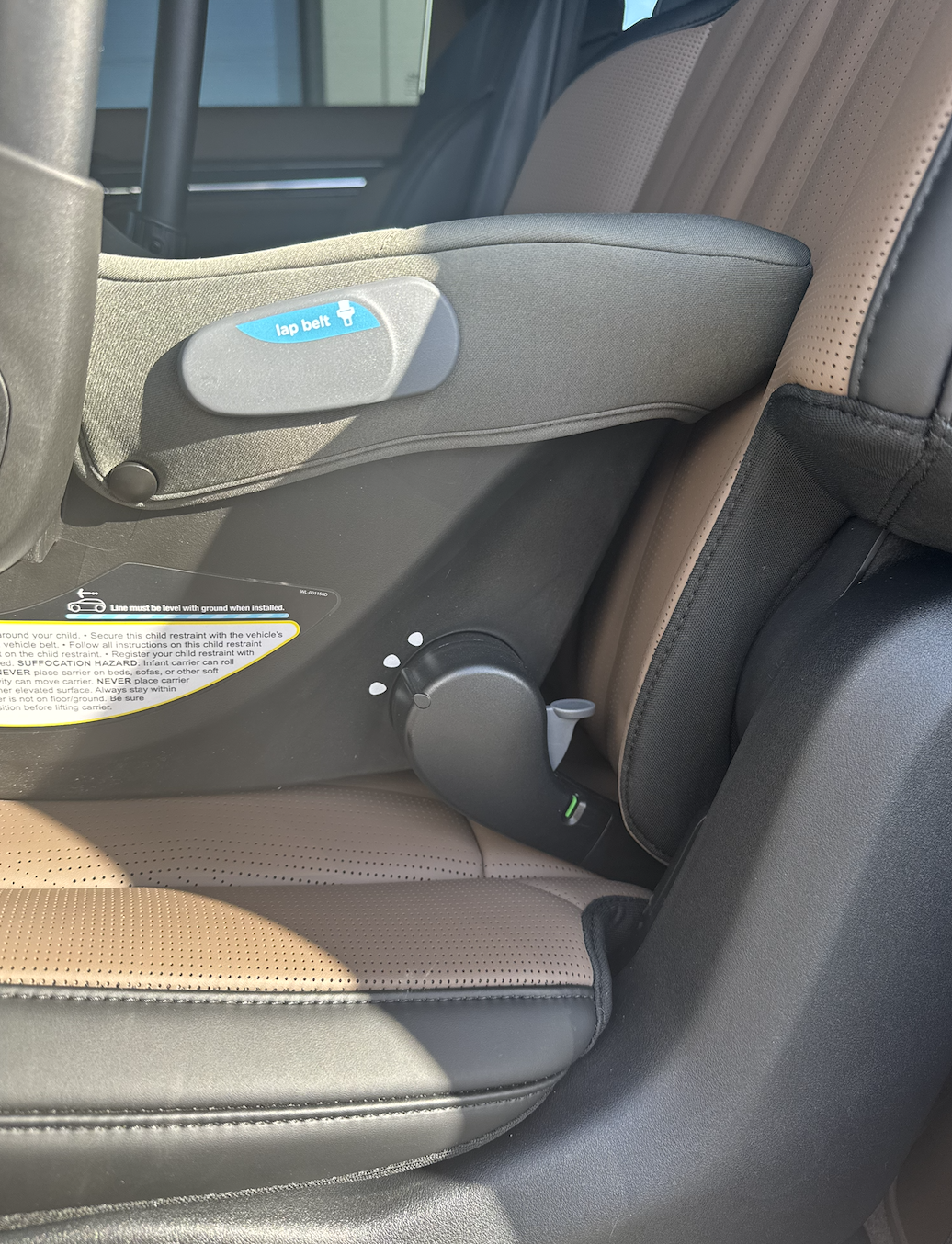
A booster seat is different from a traditional car seat because it uses your vehicle’s seat belt instead of a 5-point harness.
The booster’s job is to raise your child up so the seat belt fits properly across their body.
A proper booster setup means:
- The lap belt sits low across the hips and upper thighs, not the stomach
- The shoulder belt crosses the chest and shoulder, not the neck or face
Without proper seat belt positioning, the seat belt cannot properly protect your child in a collision!
What Are The Requirements For A Booster Seat?
This is where things can get confusing because there’s a difference between minimum requirements and best practice recommendations.
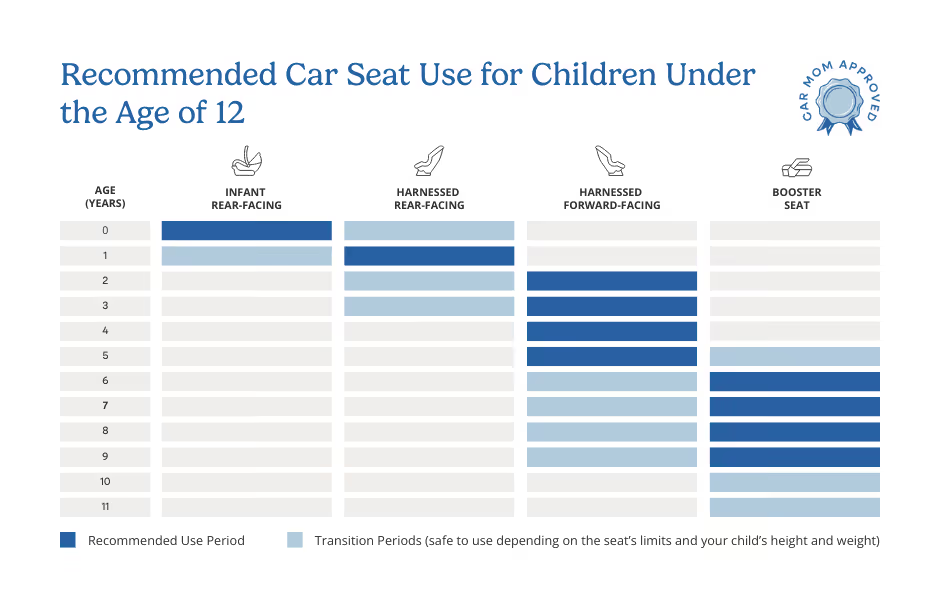
Best practice is to keep your child in their forward-facing harnessed car seat until they fully outgrow it by height or weight.
However, another safe option is transitioning to a booster once your child:
- Meets the minimum requirements listed by the booster seat manufacturer
- Has the maturity to sit properly for the entire ride
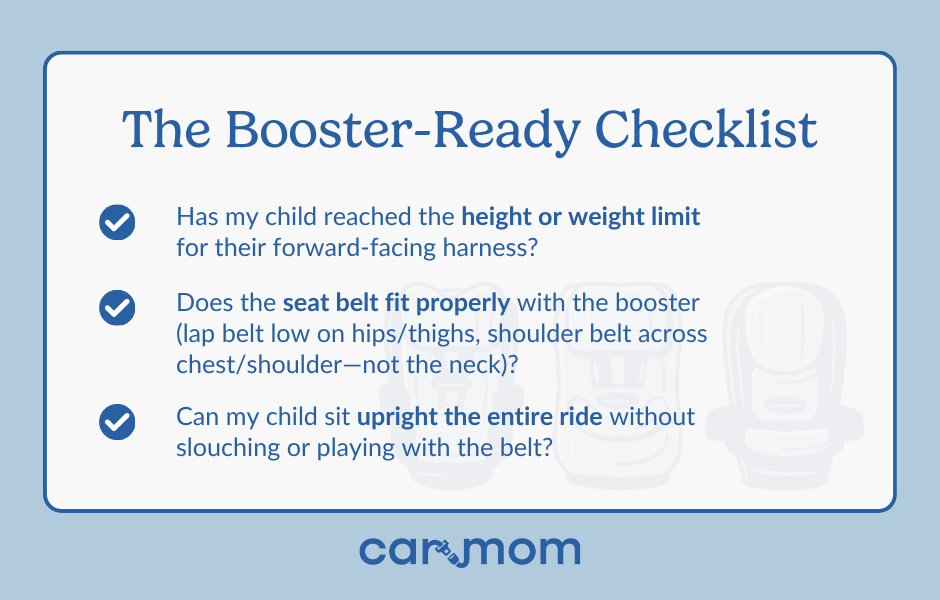
- Passes the booster readiness checklist below
A lot of parents think they are doing something unsafe if their child moves into a booster before completely maxing out their harnessed seat, but that is not necessarily true. If your child meets the booster seat minimums and can sit correctly 100% of the time, a booster may be an appropriate next step.
Can Your Child Access The Buckle?
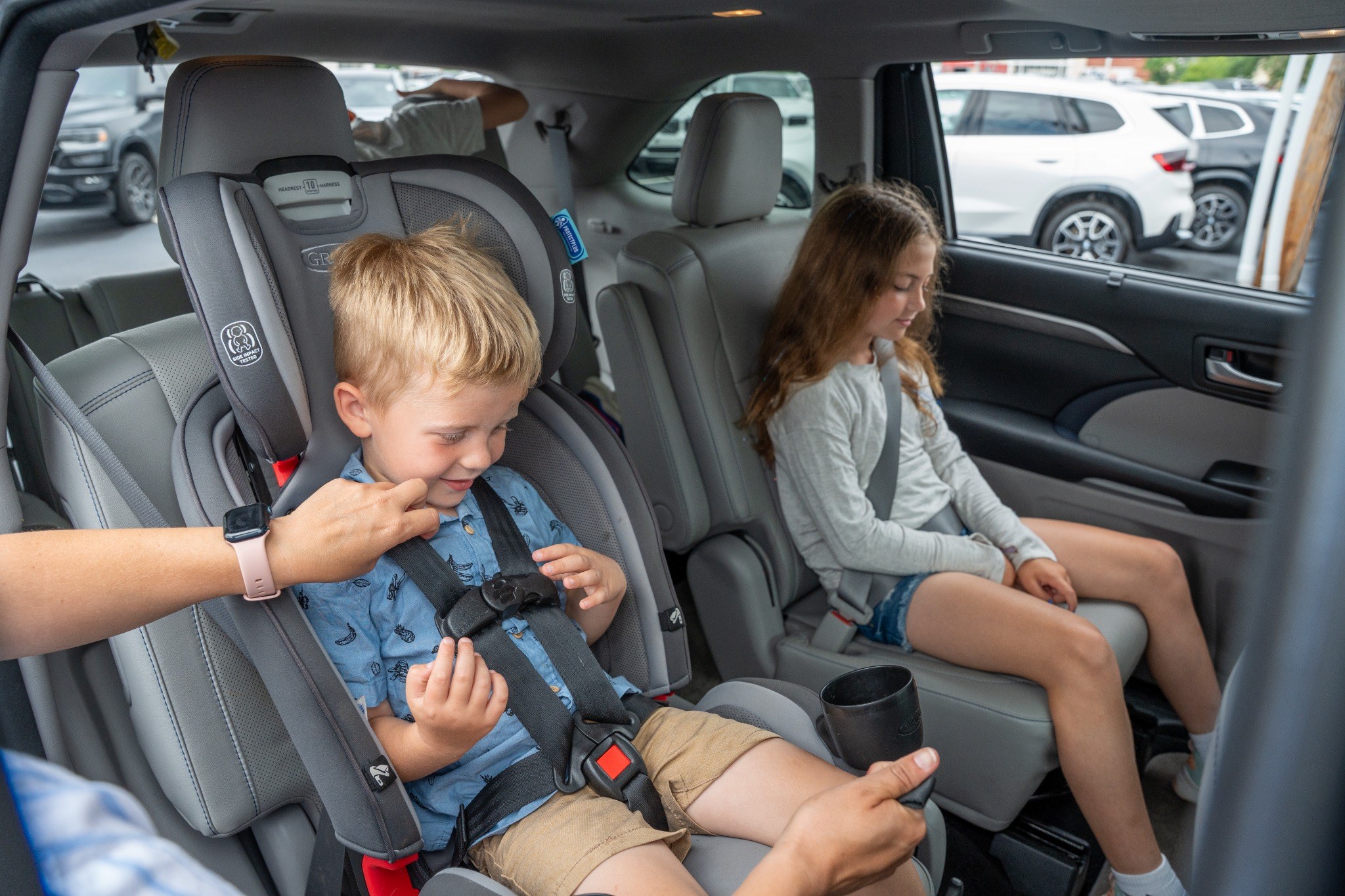
Because boosters use the vehicle seat belt instead of a harness, your child needs both the maturity and the physical ability to buckle correctly every ride.
Before switching to a booster, ask yourself:
- Does the seat belt fit correctly with the booster?
- Can my child sit upright without slouching or leaning?
- Can they leave the seat belt properly positioned the entire ride?
- Can they independently access and buckle the seat belt?
If the answer is no to any of those questions, your child is likely not booster ready yet, even if they technically meet the minimum size requirements.
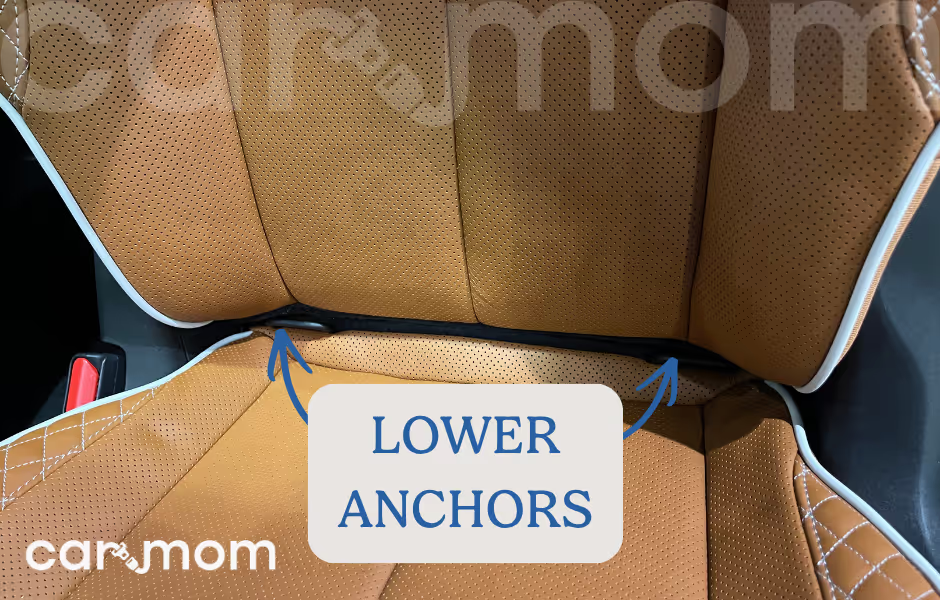
One thing I see all the time is kids struggling to physically reach the buckle because the booster seat is too wide or overlaps the buckle area. In some vehicles, this can make independent buckling really frustrating for kids.
If that’s happening, there are two things you can try:
- Switch to a narrower booster seat that gives better buckle access (we love the Peg Perego Viaggio Flex 120 Booster for this!)
- Leave the seat belt buckled and have your child climb in and out while the belt stays buckled, as long as the shoulder and lap belt remain properly positioned every ride
Sometimes parents assume booster mode will automatically feel easier, but depending on your vehicle and seat setup, buckling can actually take more practice than expected.
What’s Legal vs. What’s Recommended?
State laws often focus on minimum age, height, or weight requirements. But legal minimums and best practice recommendations are not always the same thing.
For example, many children legally qualify for a booster before they are truly mature enough to use one properly.
That’s why I always encourage parents to look at the full picture:
- Booster seat minimums
- Proper seat belt fit
- Booster readiness
- Your child’s maturity and behavior in the car
All of those factors together help determine whether your child is truly ready to ride safely in a booster.
For the most up-to-date information, check:
- NHTSA.gov
- Your vehicle manual
- Your car seat manual
Types Of Booster Seats
There are several different types of booster seats, and the best option depends on your child, your vehicle, and your family’s needs.
High-Back Boosters
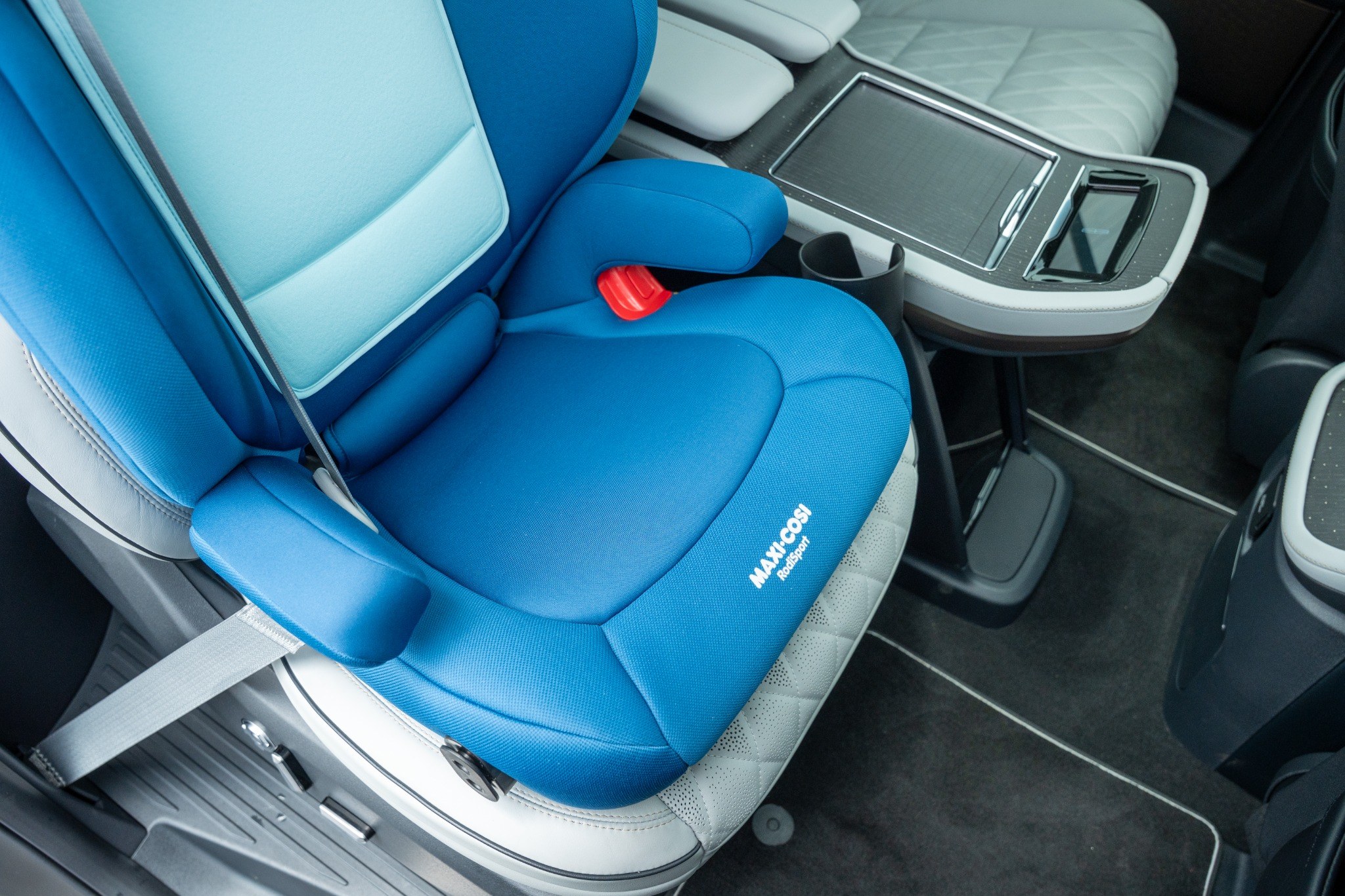
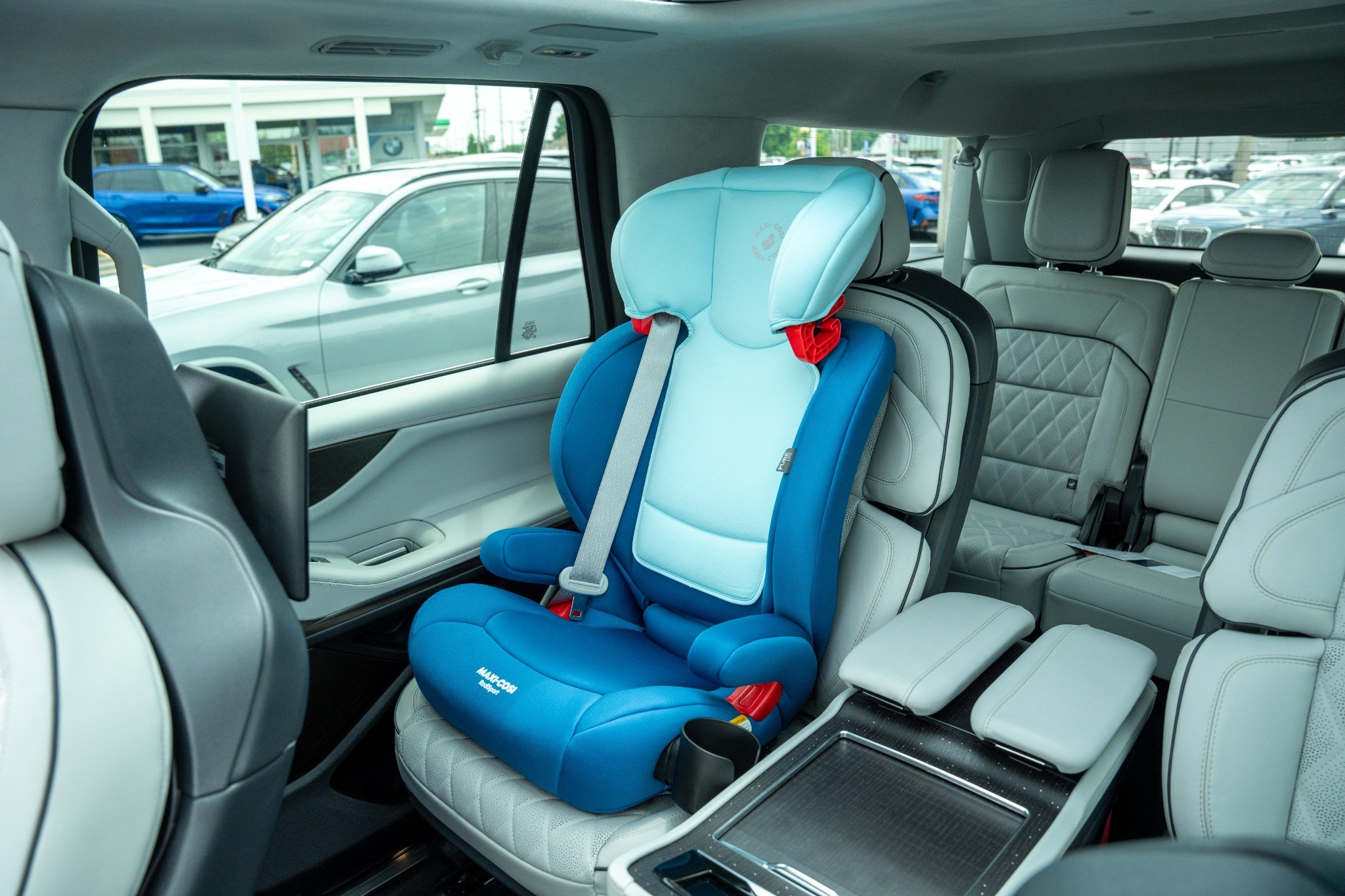
High-back boosters provide additional head, neck, and torso support. They are often a great option for children who are newer to booster seats or for vehicles without supportive headrests.
Backless Boosters
Backless boosters are lightweight, portable, and often work well for older, more independent booster riders.
If you use a backless booster, your vehicle must have adequate head support. Without proper headrests, your child is at greater risk for neck injuries during a crash.
Combination Seats
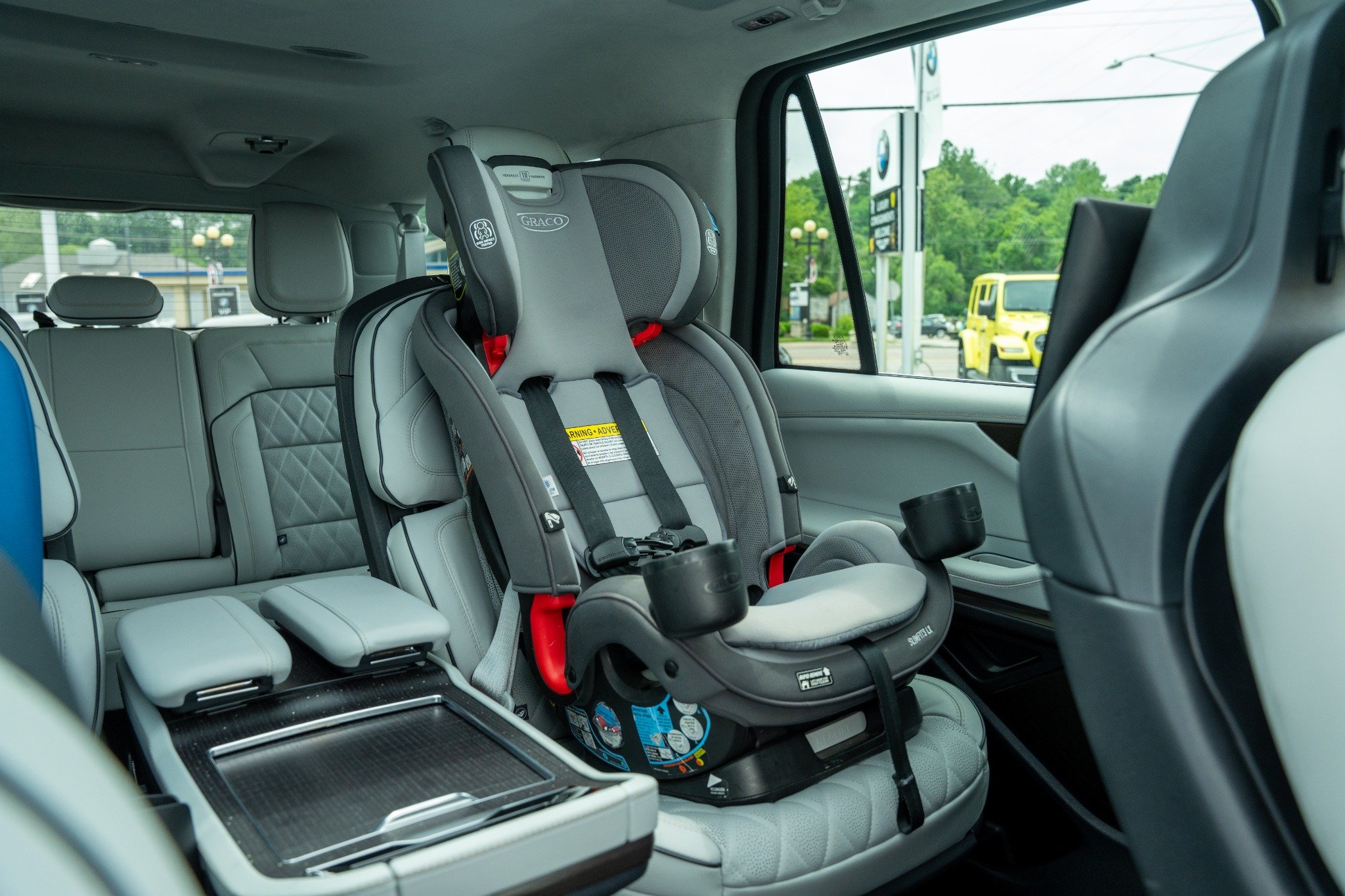
Some seats start as forward-facing harnessed seats and later convert into booster seats. While completely safe, it's typically my recommendation to purchase a dedicated booster seat.
Booster Seat Safety Tips Parents Often Miss:
Even after your child transitions into a booster, proper use still matters every single ride.
- Make Sure The Seat Belt Fits Correctly
- The lap belt should always lie flat across the hips and upper thighs, never across the stomach.
- The shoulder belt should cross the chest and shoulder, not touch the neck or face.
- Your Child Must Sit Properly The Entire Ride
- Your child should sit all the way back against the vehicle seat with knees bending naturally at the edge of the seat.
- If they slouch, lean sideways, or move the seat belt behind their back, the seat belt cannot properly protect them.
- Buckle The Booster Even When It’s Empty
- If your booster does not have LATCH, it should still be buckled in whenever it remains in the vehicle. An unsecured booster can become a dangerous projectile during a sudden stop or crash.
Does Your Car Have Non-Removable Or Angled Headrests?
One of the biggest challenges with booster seats can actually be the vehicle itself.
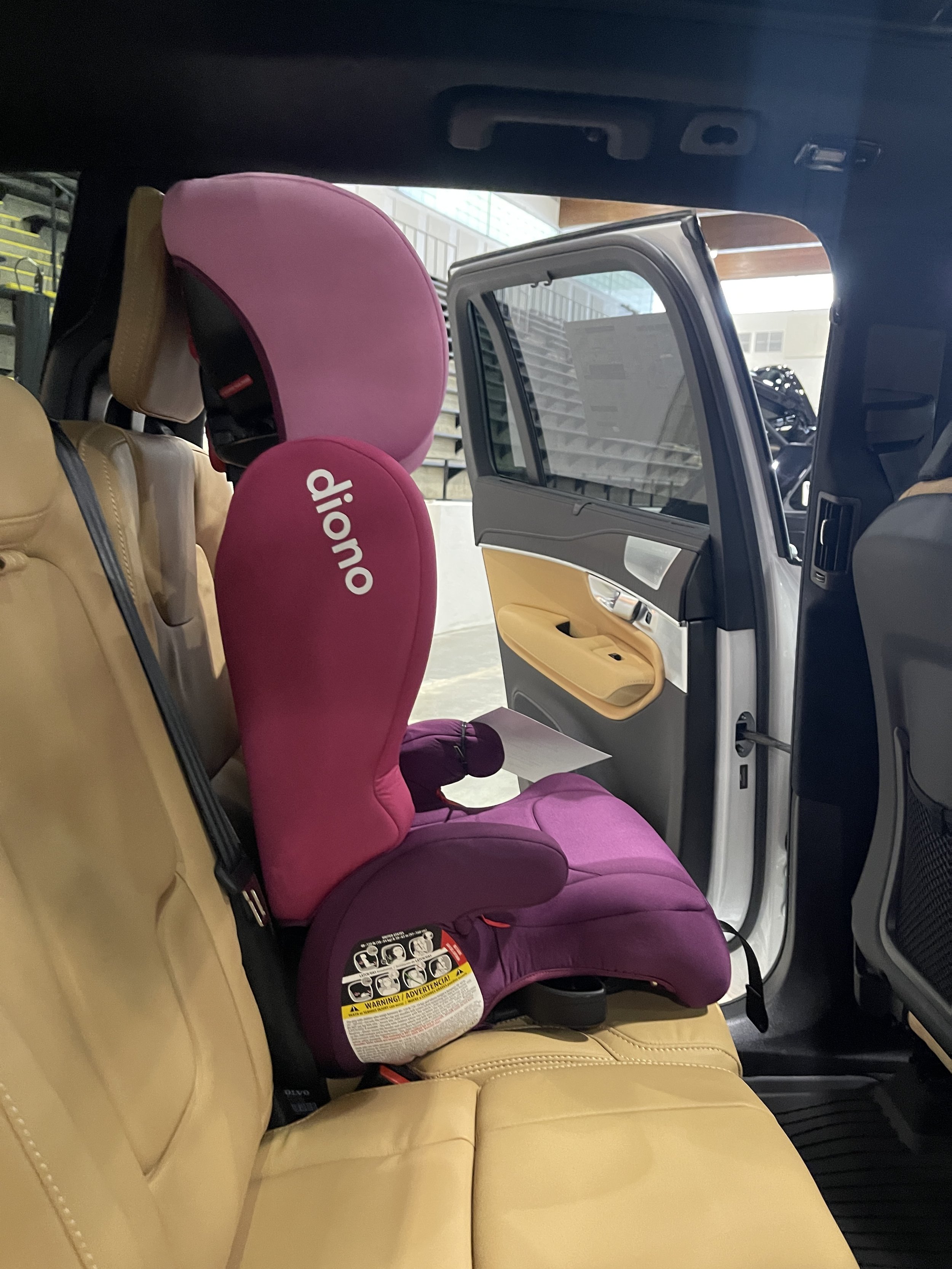
Some vehicles have forward-angled or non-removable headrests that prevent certain boosters from sitting flush against the vehicle seatback.
When this happens, the booster may be pushed forward and create a gap between the booster and the vehicle seat.
For example, the Infiniti QX80 has angled headrests in the third row that can make proper car seat installation extremely difficult.
When testing a booster:
- Install the seat and check whether it sits flat against the vehicle seatback
- Review both your car seat manual and vehicle manual
If you are unsure, contact your car seat manufacturer for guidance.
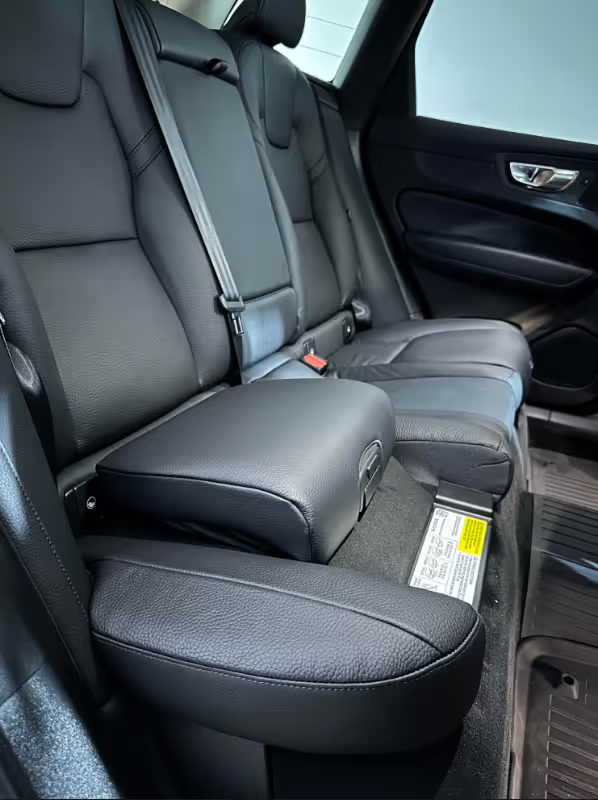
Did You Know The Volvo XC90 Has A Built-In Booster?
Volvo is currently the only vehicle brand still offering a built-in booster seat option.
In the Volvo XC90, the integrated booster pops directly up from the second-row seat cushion to help position the seat belt properly for your child.
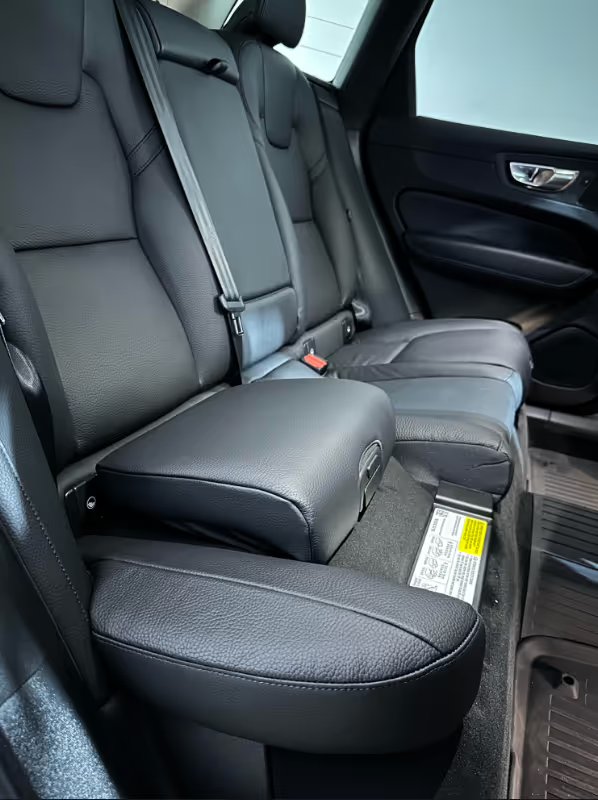
Built-in boosters are typically best for children mature enough for a backless booster who can sit upright for the entire ride.
Don’t Rush The Transition
Booster seats are incredibly safe when used properly, but proper fit and maturity matter far more than age alone.
If your child meets the booster minimums, passes the readiness checklist, and can consistently sit properly for the entire ride, a booster may be a safe next step for your family.
And if you are unsure? It is always okay to wait a little longer.
Related Car Seats
.jpg)
Relevant Articles










Reach out & let’s get started
Whether you're comparing models, prepping for the dealership, or looking for car seat recommendations, we’re here to help.