
.jpg)
.jpg)

.jpg)



Car Seat LATCH System | What It Is & How To Use It
Car Seats
It’s time for a little Car Mom vocab lesson, our “word of the day” if you will, and today’s word is: LATCH.
If you’ve watched any of my car tours, you’ve definitely heard me talk about the LATCH system because it’s such an important part of car seat safety. Honestly, I also think it’s one of the most overlooked features when parents are shopping for a family car. As a mom and Child Passenger Safety Technician (CPST), I pay very close attention to LATCH locations because they can make a huge difference in how functional a vehicle is for real-life family setups.
In this guide, I’m breaking down exactly what the LATCH system is, how it works, common mistakes parents make, and how LATCH can impact your car-buying decisions both now and as your family grows.
What Does LATCH Mean?
LATCH stands for:
- Lower Anchors
- And
- Tethers for Children
The LATCH system is designed to help secure a car seat safely into your vehicle using built-in anchors instead of the vehicle seat belt.
Most vehicles have:
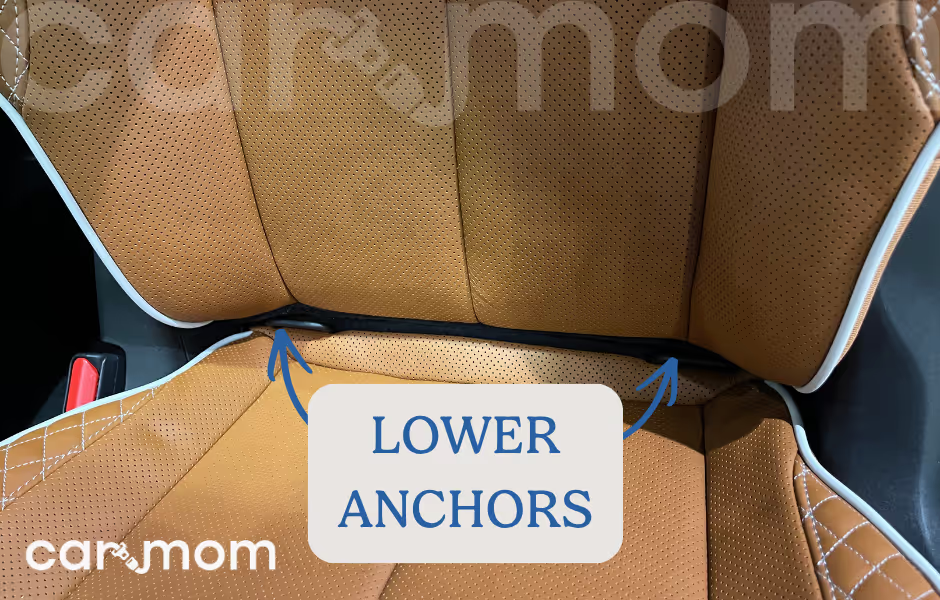
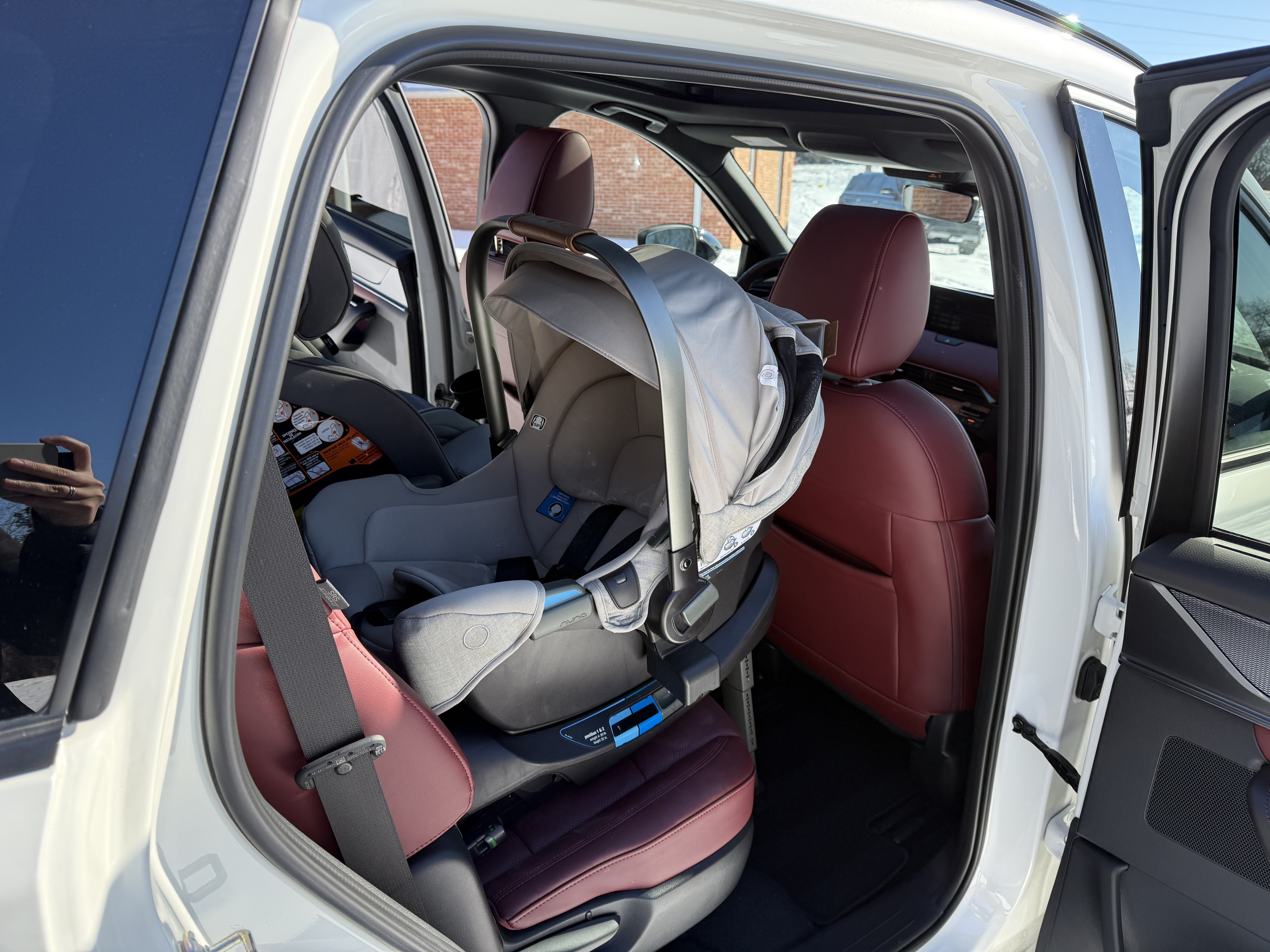
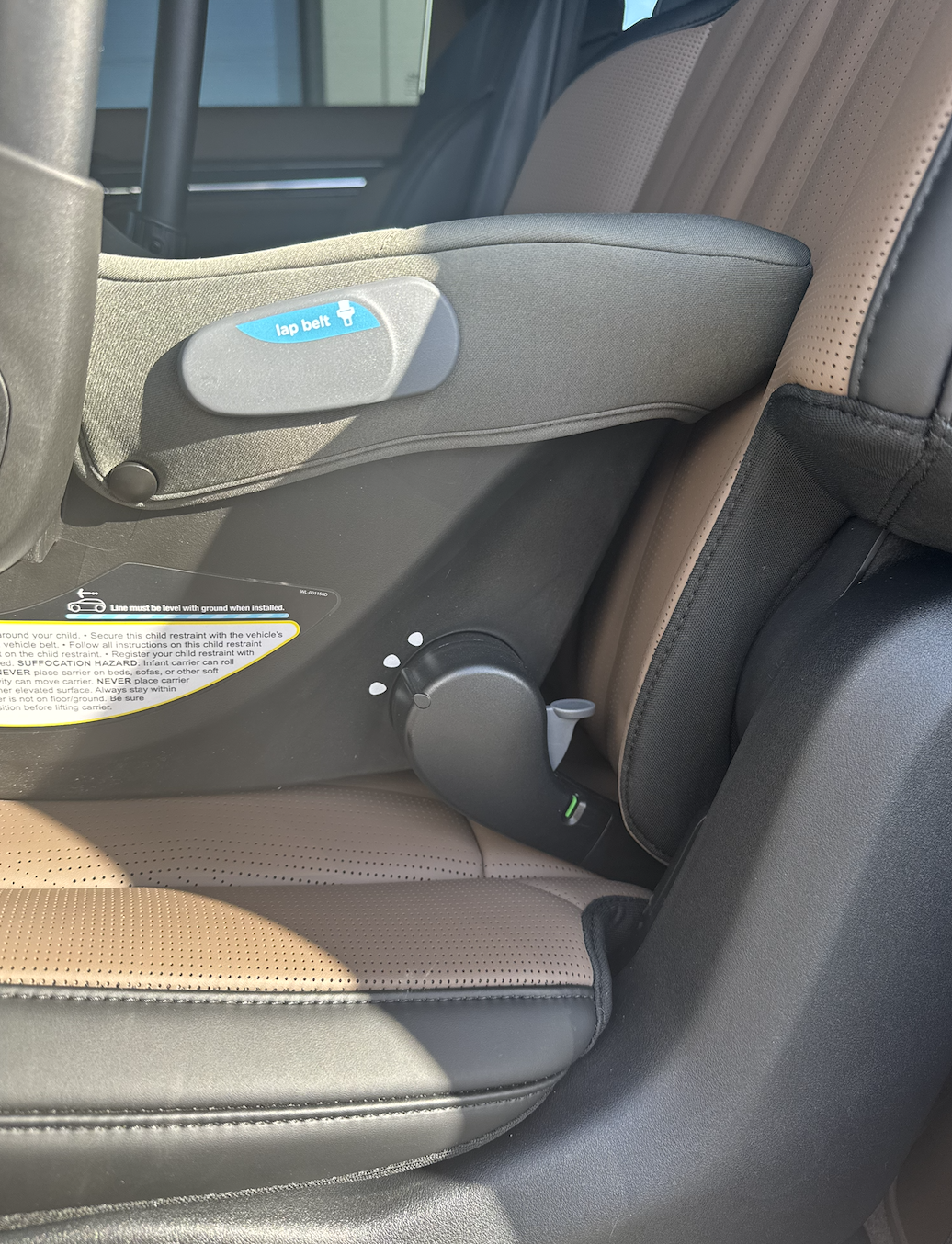
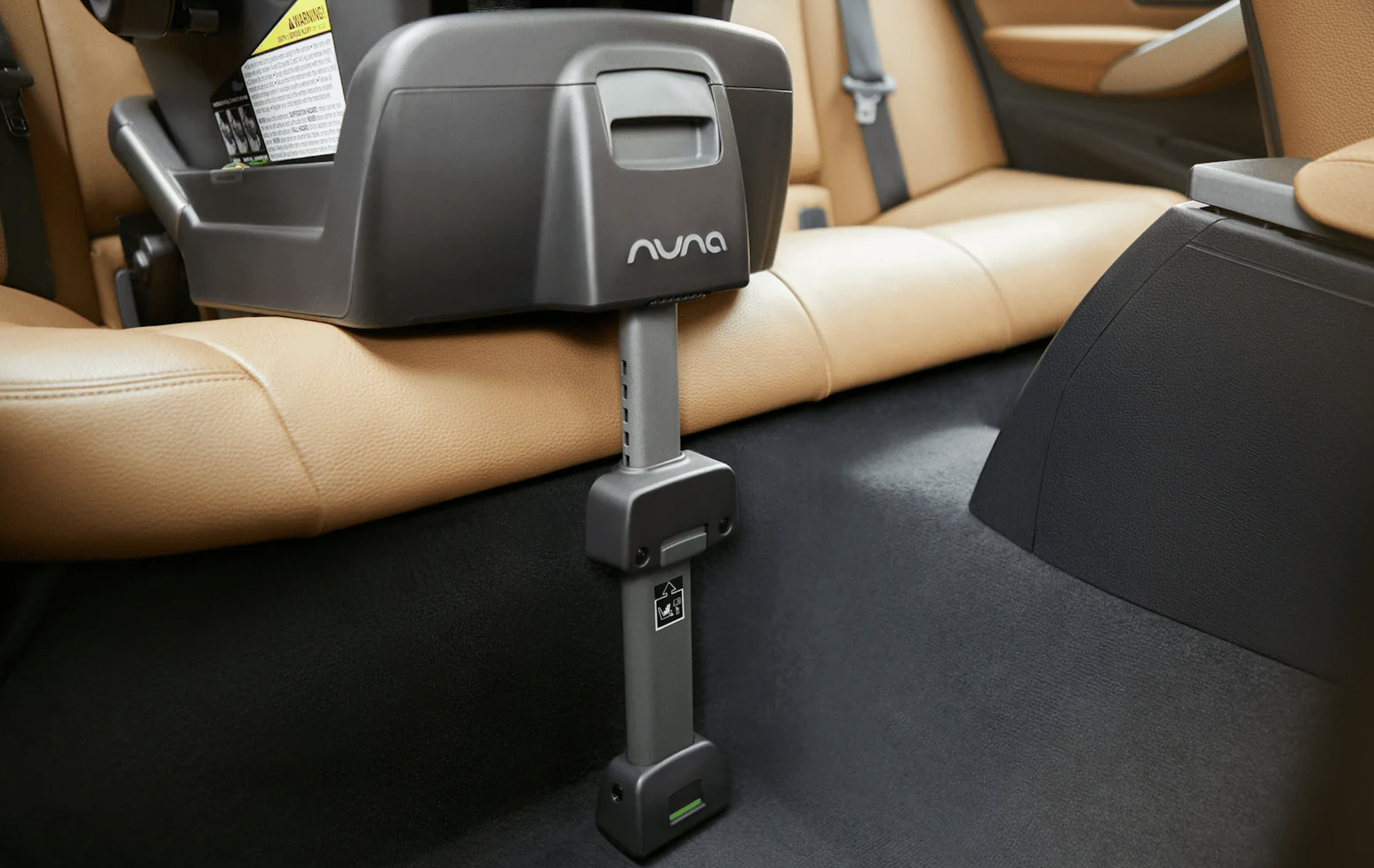
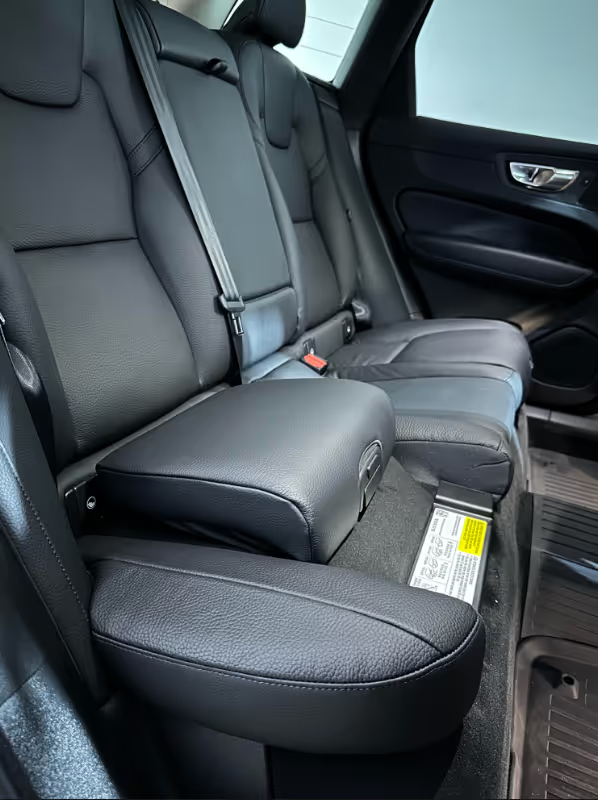
- Lower anchors located in the seat crease
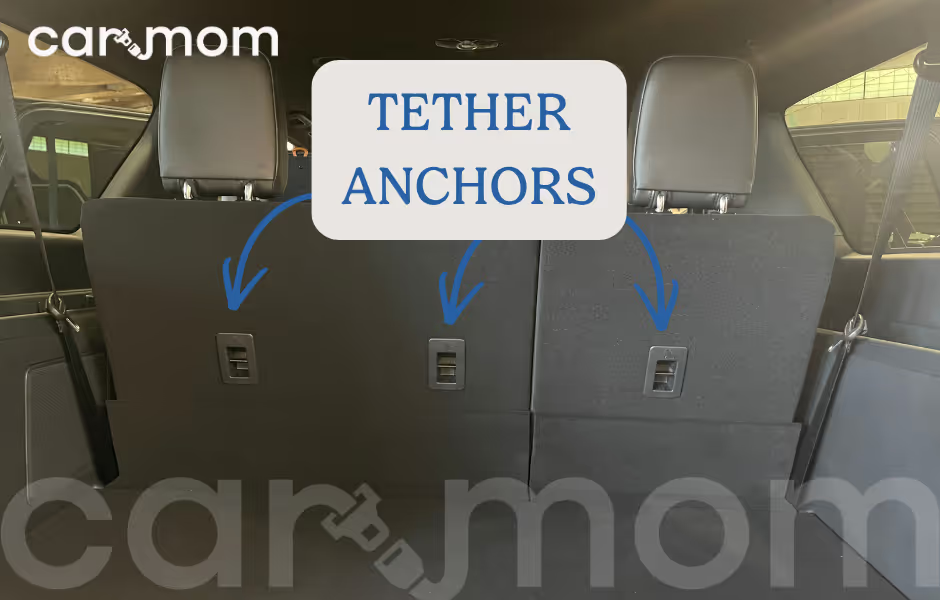
- Top tether anchors located behind the seat for forward-facing car seats
Where Are LATCH Anchors Located In A Car?
Unfortunately, there’s no universal answer because every vehicle is different. This is actually a huge part of why I create this content — because it’s not always easy to figure out exactly where the LATCH anchors are located from one vehicle to the next.
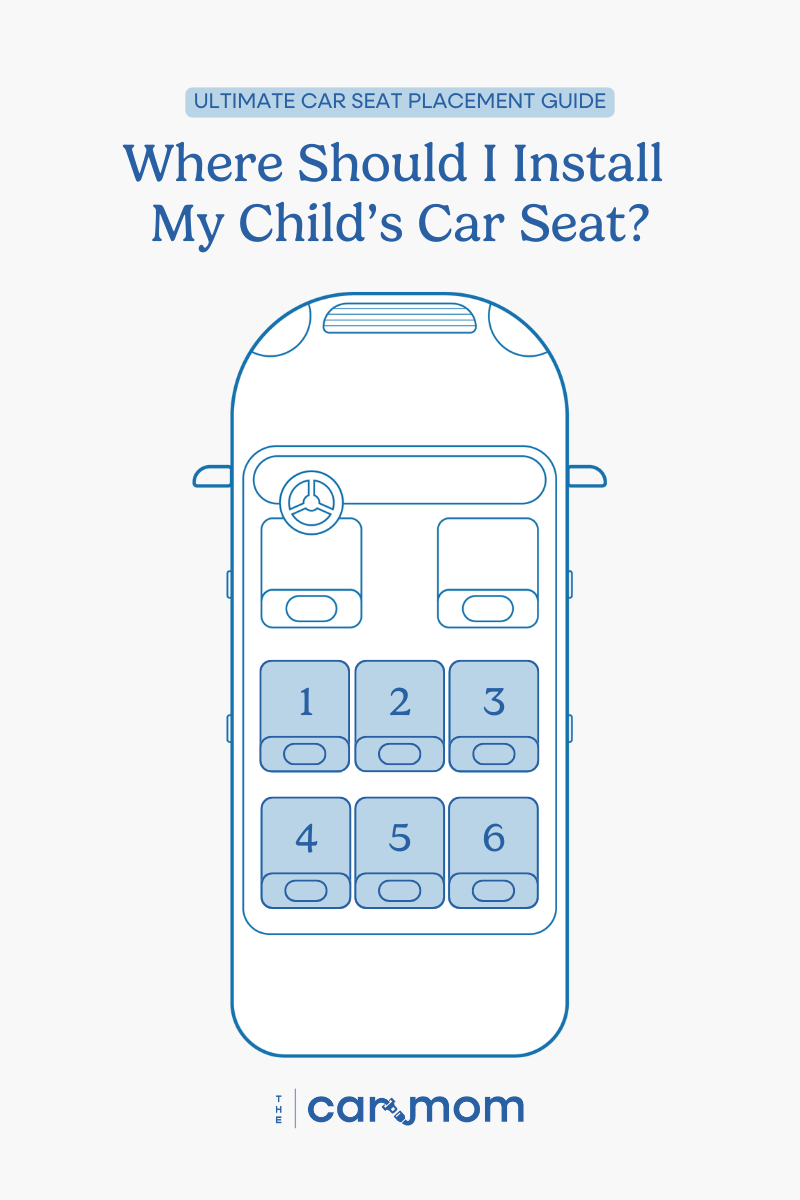
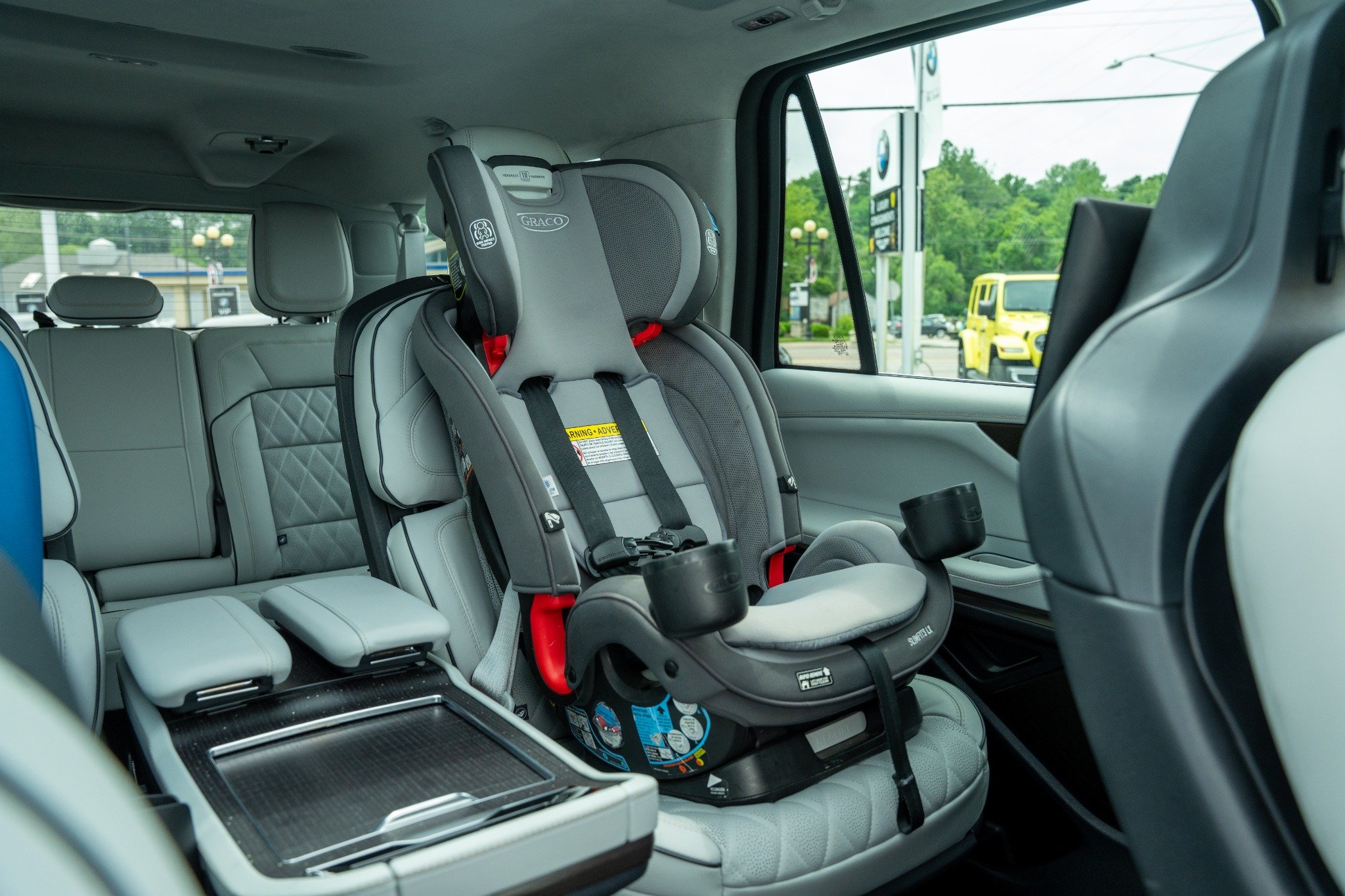
It’s also important to know that it is not standard for every seat in every vehicle to have lower anchors. Some cars may only have lower anchors in certain second-row seats, while others may include additional LATCH positions in the third row. That’s why checking your vehicle manual matters so much when planning your car seat setup.
Some vehicles offer:
- Lower anchors and top tethers in both the second and third rows
- Lower anchors only in certain seats
- Top tether anchors without lower anchors in the third row
And some vehicles have much more family-friendly LATCH setups than others, which is one of the reasons I pay so much attention to this during car tours.
If you’re trying to figure out where your LATCH anchors are located, your vehicle owner’s manual is always the best place to start.
.avif)
Can You Use LATCH And A Seat Belt Together?
In most cases, no.
Many parents assume using both the lower anchors and the vehicle seat belt together would make a car seat “extra safe,” but that’s actually not how car seats are designed to function.
When installed correctly, the car seat is engineered to move a certain way during a collision to help absorb crash forces. Using both systems together when the manufacturer does not allow it can change how the seat performs during an impact.
There are some exceptions, though. If both your vehicle manual and your car seat manual specifically allow using lower anchors and the seat belt together, then follow those instructions.
When in doubt, always follow the manuals or reach out to a CPST for guidance.
Is It Better To Use LATCH Or A Seat Belt?
When used correctly and according to manufacturer instructions, both installation methods are equally safe.
The biggest thing parents need to know is that LATCH does have weight limits.
That limit can vary between vehicles, so it’s important to check the lower anchor limit for your specific car, which can be found in your vehicle’s manual.
Once your child and car seat exceed that limit, you’ll need to switch to installing the car seat using the vehicle seat belt instead.
Do You Use LATCH Differently For Rear-Facing And Forward-Facing Car Seats?
Potentially, yes.
Every vehicle and every car seat is different, which is why checking both manuals matters so much. Some seats allow lower anchor installation in both rear-facing and forward-facing modes, while others have different requirements depending on the child’s size and seating position.
For forward-facing car seats, top tether anchors become especially important because they help reduce forward head movement during a collision.
Can You Add LATCH Anchors To A Vehicle?
No.
Do not purchase aftermarket LATCH retrofit kits.
While built-in lower anchors and tether anchors are ideal, your child is much safer using a properly installed seat belt installation than using an aftermarket retrofit product that was not designed or approved for your specific vehicle.
If your vehicle does not have lower anchors in a seating position, you can still safely install many car seats using the vehicle seat belt.
Exposed vs. Hidden Lower Anchors
One thing you may notice when comparing vehicles is that some have exposed lower anchors while others hide them deeper inside the seat crease. Functionally, they work the exact same way, but exposed anchors are definitely a nice convenience feature in newer family vehicles.
If you’ve ever had to dig your fingers deep between the seats trying to find the lower anchors, you know exactly what I’m talking about. Exposed anchors make car seat installation much easier and faster, especially if you’re frequently moving seats around or installing multiple car seats across.
Why Do Some Booster Seats Have Lower Anchors?
This is something we’re starting to see much more often with newer booster seats, and honestly, I love it.
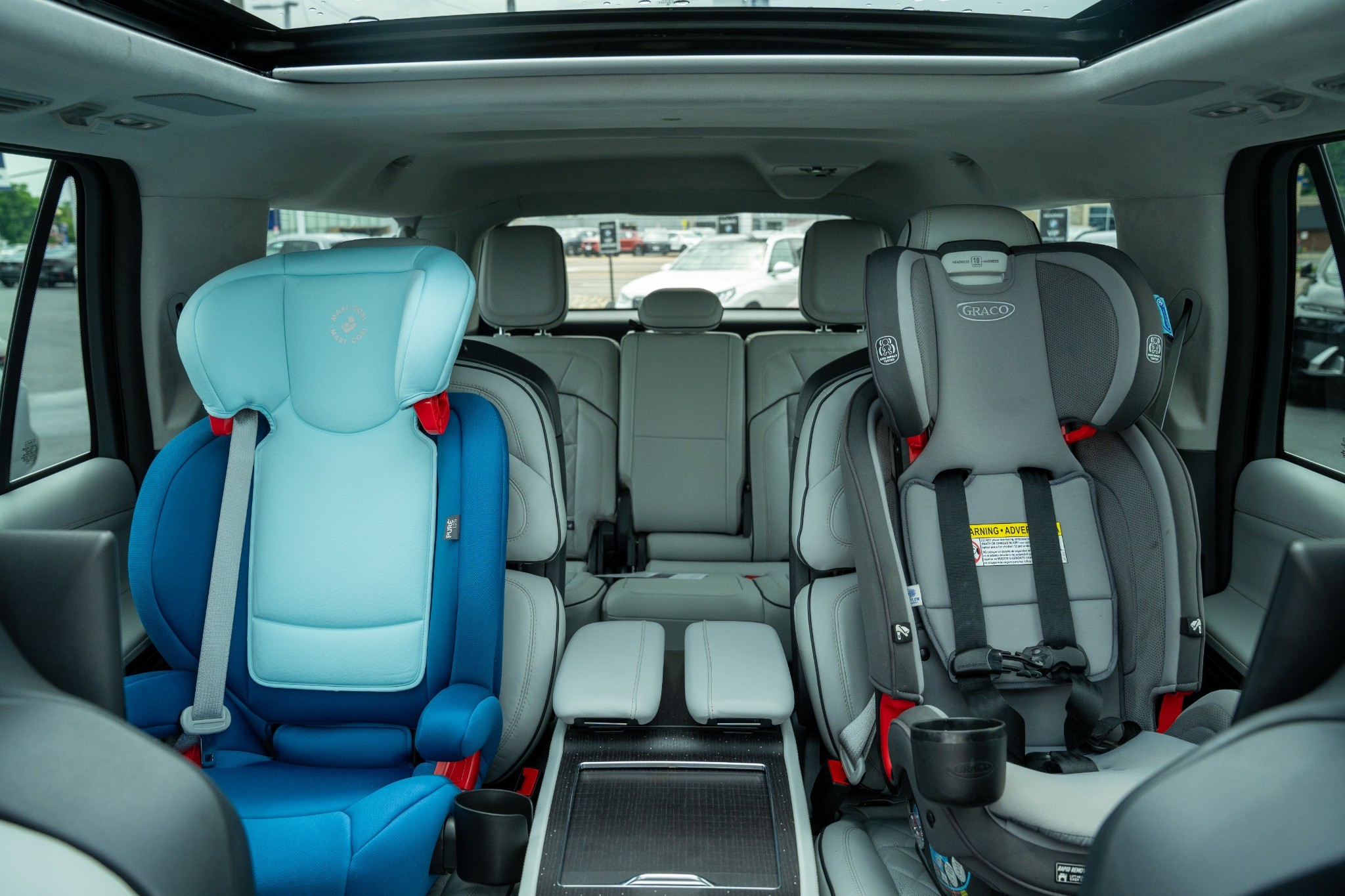
Traditional booster seats without LATCH should still be buckled in with the vehicle seat belt when your child is not riding in them. Otherwise, the booster can become a projectile risk during a collision or sudden stop.
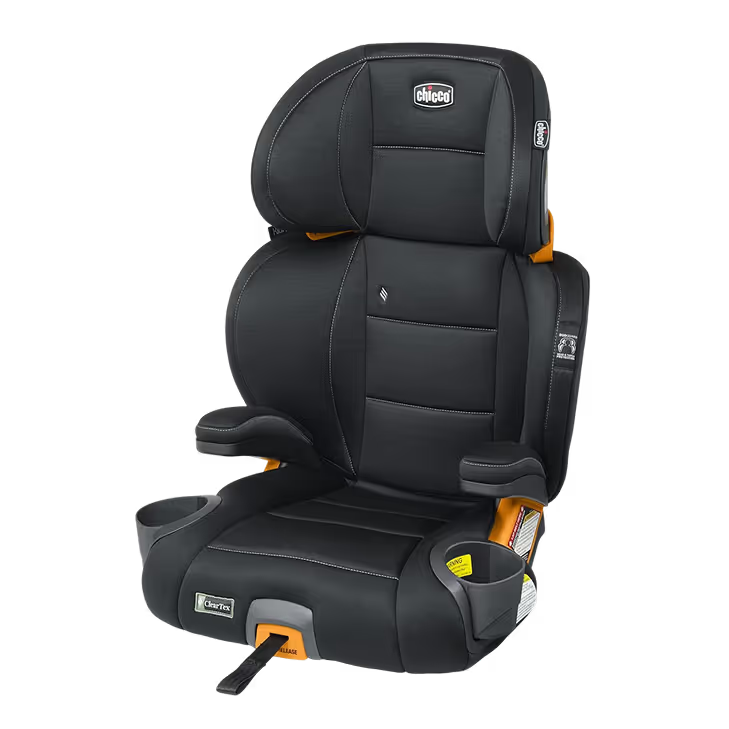
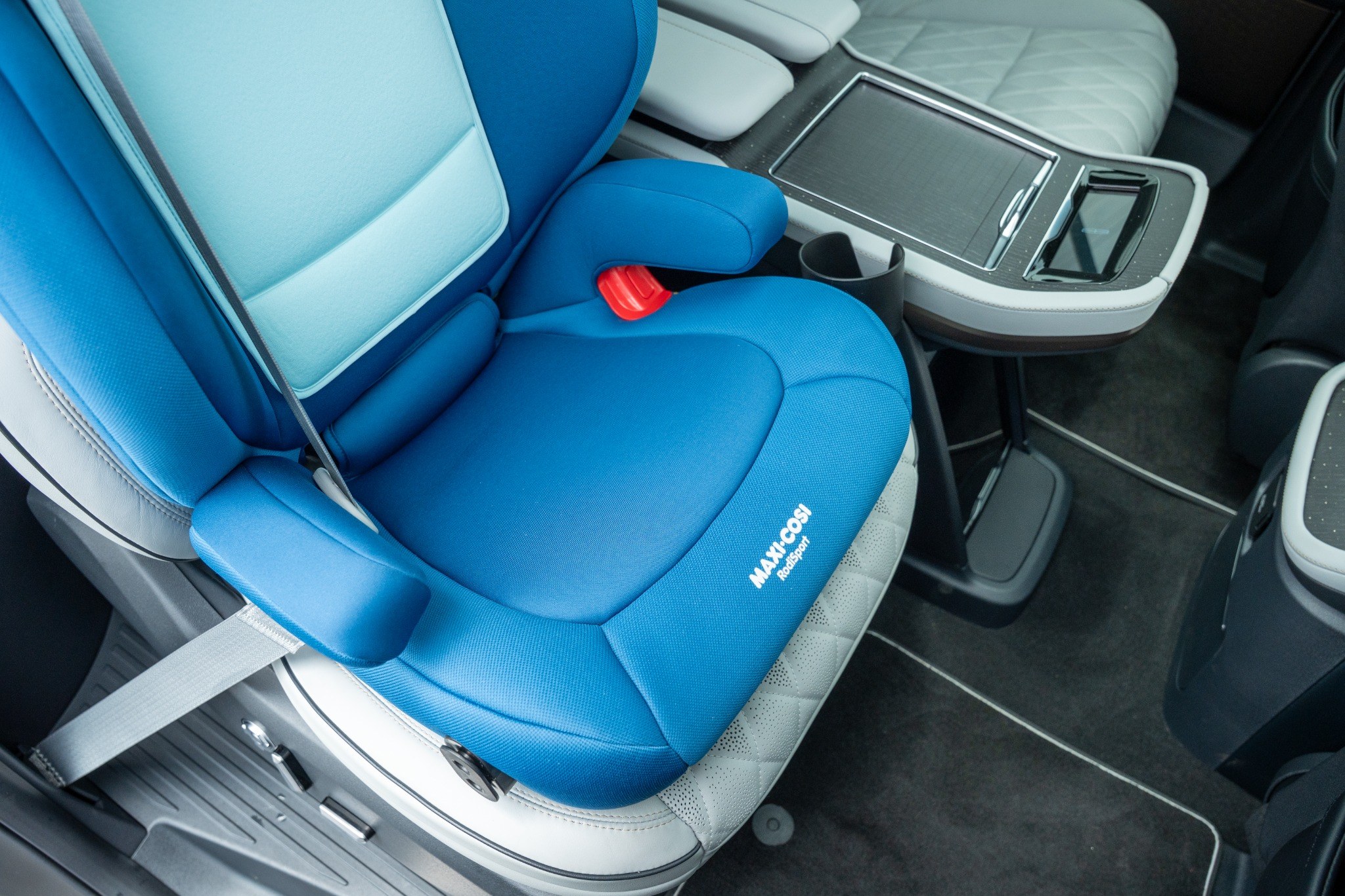
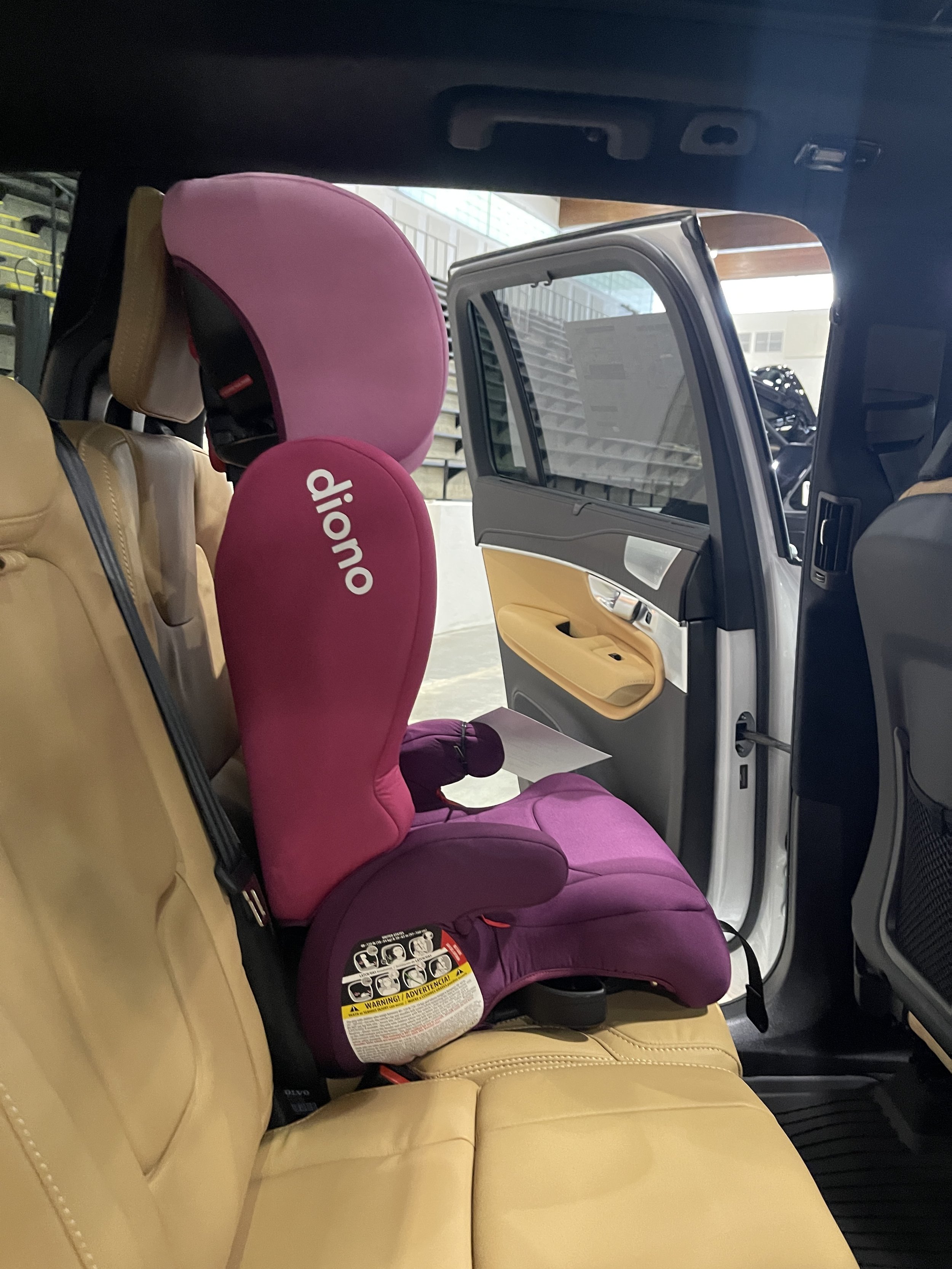
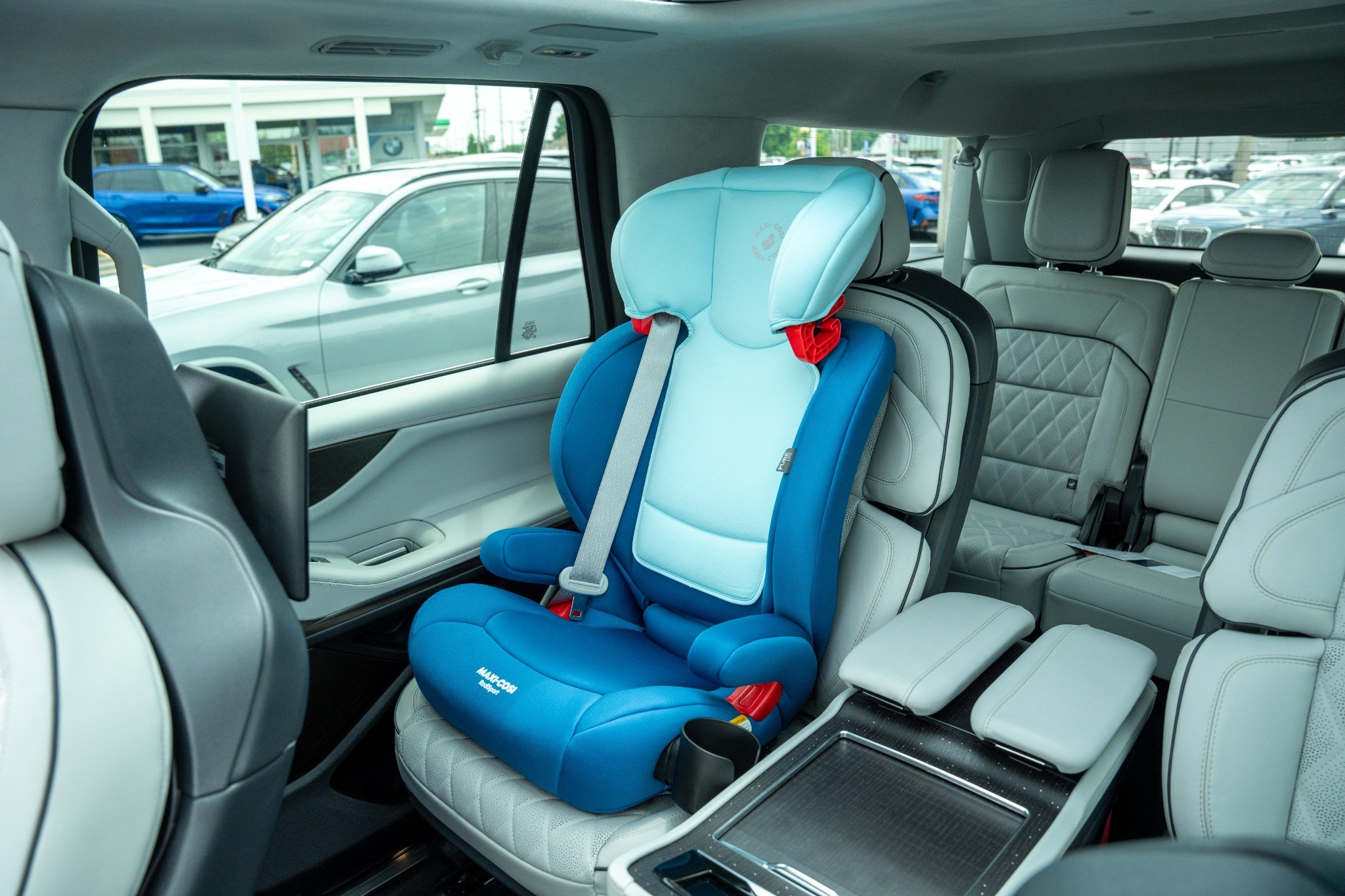
That’s why many newer boosters now include optional LATCH connectors that allow the booster itself to stay secured to the vehicle at all times. Your child would still use the vehicle seat belt while riding in the booster but he LATCH system is simply there to keep the booster attached to the car when it’s empty.
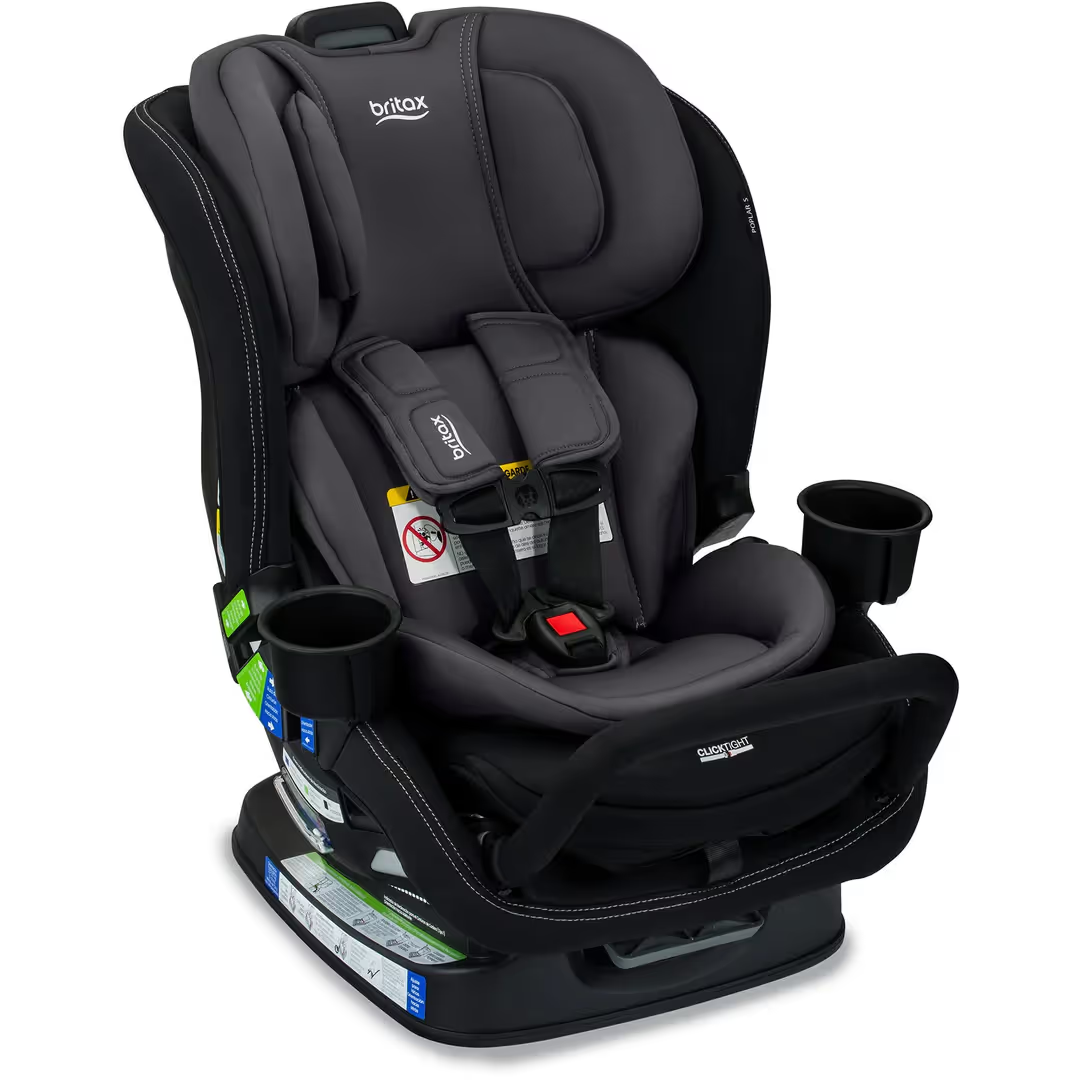
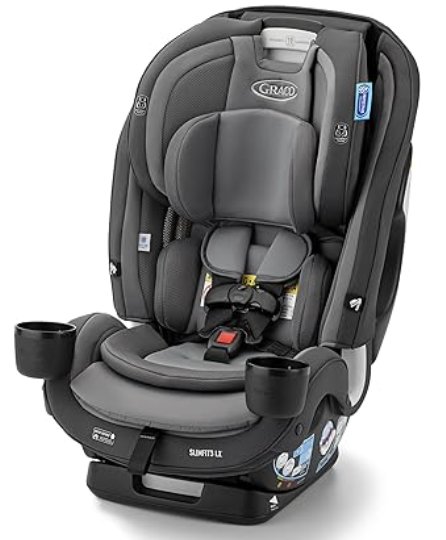
Some booster seats that offer this feature include:
One important thing to know is that LATCH on booster seats is typically optional. You do not need to use the lower anchors for the booster to function safely, but it can absolutely make everyday use more convenient and help keep the seat secure when it’s unoccupied.
Why LATCH Matters When Choosing A Family Car
One thing I always tell parents is that car seat setup matters just as much as cargo space and cupholders when choosing a family vehicle.
The number of LATCH positions, tether anchor locations, and overall car seat friendliness of a vehicle can dramatically impact how functional your car feels as your family grows.
That’s why I pay so much attention to these details during my car tours — because the “best family car” really depends on how your family actually needs to use it.
.jpg)
Relevant Articles










Reach out & let’s get started
Whether you're comparing models, prepping for the dealership, or looking for car seat recommendations, we’re here to help.